


Morning, friends! ☀️
It’s been a minute since I shared one of your stories, and I can’t wait for you to meet Jenn Woltjen, who writes the wonderful newsletter Outdoors with Jenn , in which she shares her adventures (and amazing photography) of all her, well, outdoor adventures — running, hiking, skiing, and exploring of all kinds.
One of the things I love most about Jenn’s story is the legacy her mother — whom she describes as “fiercely strong and independent,” and who encouraged her daughter to cultivate those same qualities — gave her. Because I’m a parent of two myself, seeing how deeply Jenn’s mom influenced her has given me so much to think about.
Jenn came to running a little over two decades ago, and has since achieved things many of us dream of — running the Boston and New York marathons, as well as many ultra-marathons. She’s just amazing, and I know you’ll love her story as much as I did.
As always, keep in touch and let me know how your running/life is going. And if you’d like to share your story here, please reach out! — Terrell

So, let’s hear a little bit about you! Who are you, your age (if you’d like to share), where you’re from, what you do, etc.
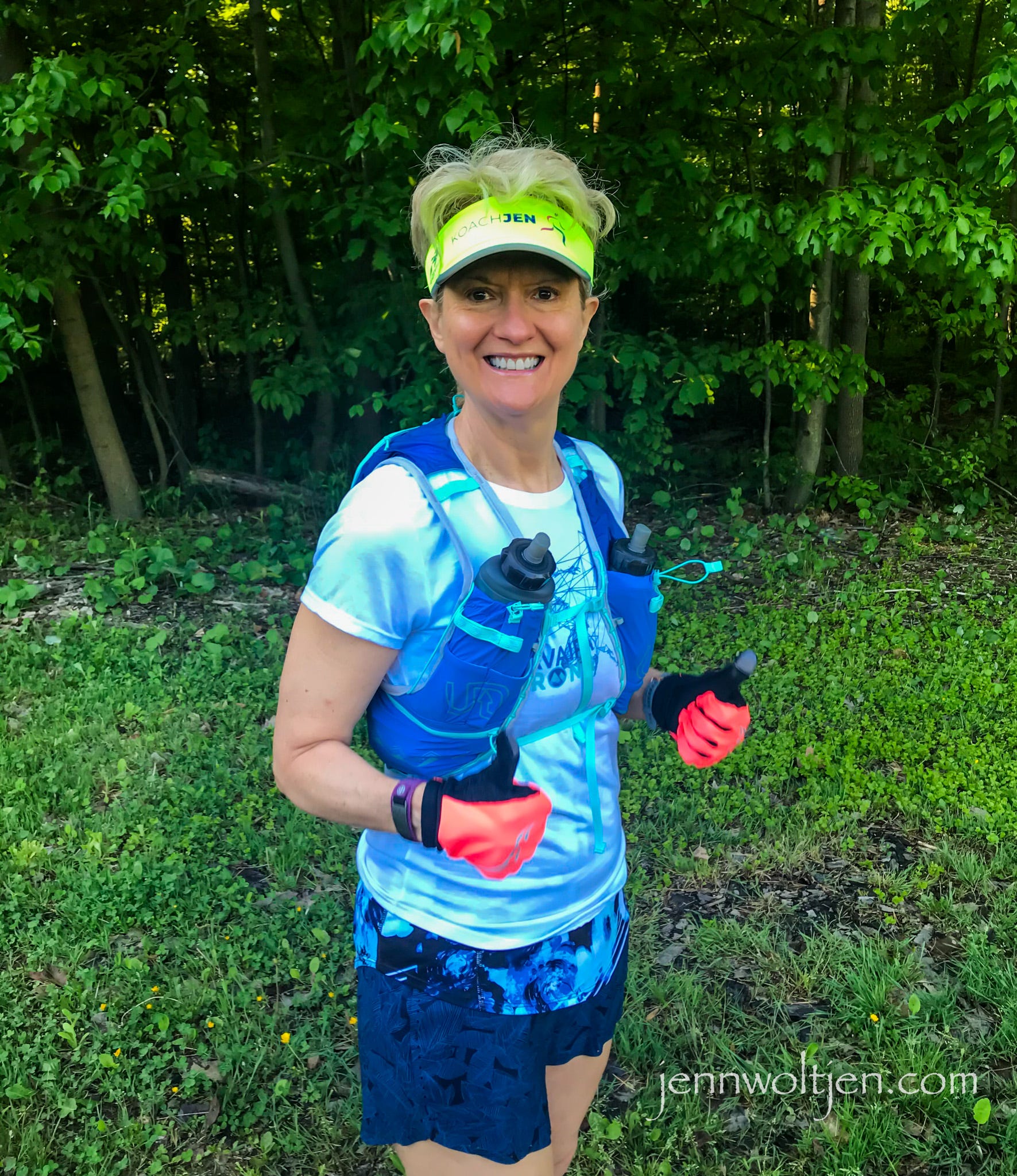
My name is Jenn Woltjen and I am now 68 years old. I live in upstate New York near the Finger Lakes. I retired from a career in higher education about 10 years ago.
Since then, I’ve devoted my life to pursuing my love of endurance sports and my passion for sharing my adventures through my writing and photography. You can find more about me, my writing and photography on my new website at JennWoltjen.com.
What does your running routine look like? How many times a week, and how far do you run?
These days, my exercise routine is more about listening to my body than about training plans.
My general goal is to run or cycle about 3 to 5 times a week. I wake up, check in with how I feel, and go from there. Some days call for miles. Other days, I may do yoga or lift weights.
When my body asks for it, I lean more on cycling and less on running. It allows me to stay active while reducing impact and giving my legs a break. In the winter, I cross-country ski more.
Earlier in my running career, I would run 5 to 6 times a week when training for a marathon or ultra. While I’d love to run that much now, those days are behind me. My goal today is to stay active — with cross-country skiing, running, cycling, and other sports — for as long as possible.
Were you an athletic kid growing up? What are your early memories of what fitness and health were about?
I wasn’t a runner growing up — and I wouldn’t have described myself as particularly athletic.
I loved being outdoors, shaped in large part by my mother. A fiercely strong and independent single mom, she encouraged that same spirit in me — signing me up for Girl Scouts and opening the door to camping, hiking, and life outside. Those experiences built my confidence and independence.
I was also drawn to horses. When my mother could afford it, she took me to a local stable that offered trail rides. Getting out onto the forested trails on horseback opened up a new world for me.
How did you first get into running? Was there something that inspired you — like a performance at the Olympics, for example, or a runner you discovered by watching them on social media or TV? Or was there someone in your own life who inspired you to think, ‘maybe I can do this?’
I was not born to run. My first love was cross-country skiing and I took up running simply to stay in shape.
After my mom passed away in 1996 from Alzheimer’s, I stayed rooted in those same pursuits — skiing, hiking, moving through the woods. When I started running in the early 2000s, it was still just a tool to help me get in shape for skiing.
At first, I wasn’t sure how far I could run. My first half marathon felt like a major accomplishment. I was slow, and I didn’t have the confidence to go faster — let alone imagine finishing a marathon. But I did have endurance built from my years of cross-country skiing.
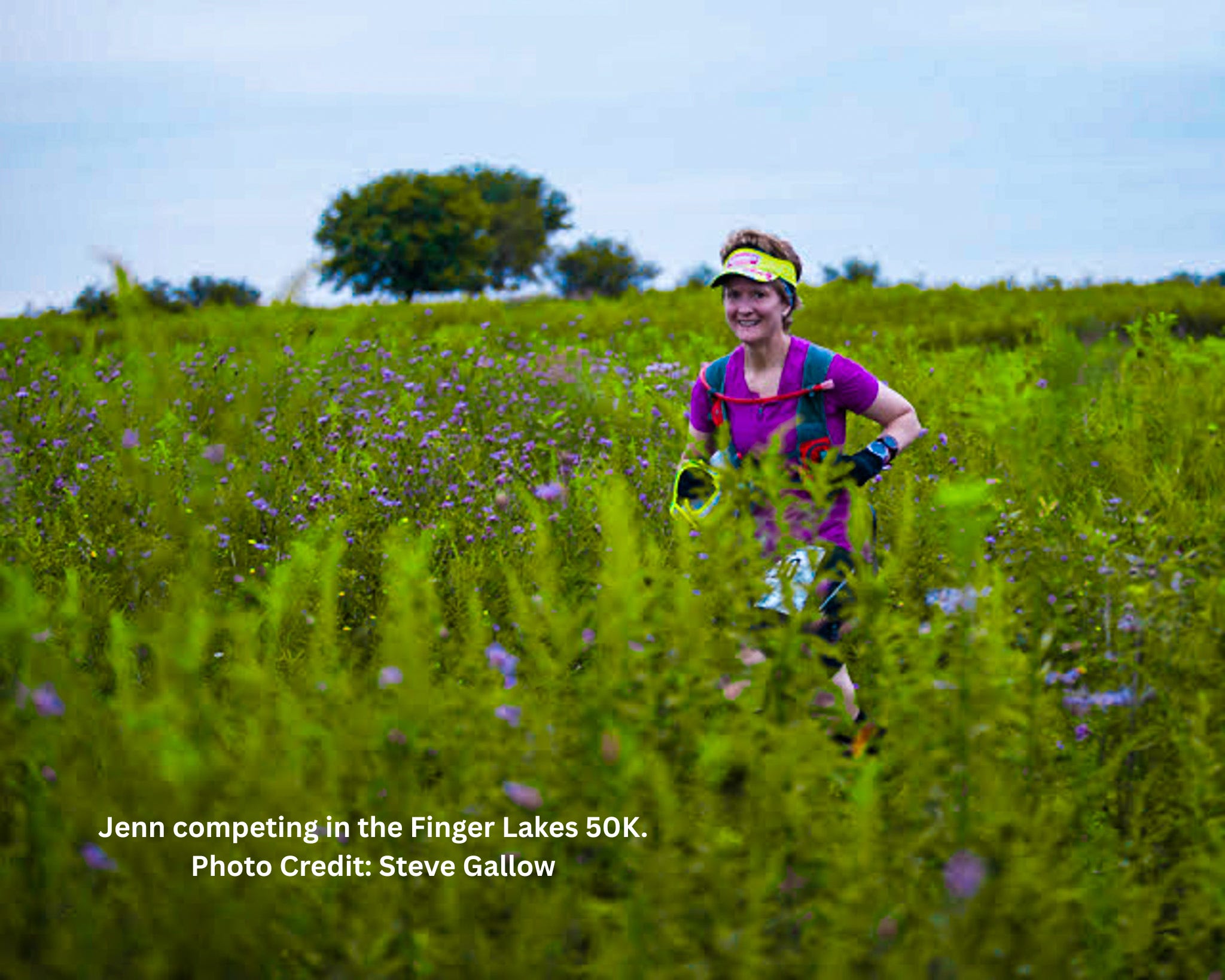
So I made an unexpected leap — from half marathons to ultras. To me, ultras felt like a natural extension of what I already loved: a combination of fast hiking and slow running, often on trails. I finished my first ultramarathon in 2014, and I loved it. Being out on the trails made all the difference.
Over time, running became something more. I’ve since run marathons, including New York City and Boston, along with many long-distance races in between. I often think about how proud my mother would have been — and wish she could have been there at the finish line.
In 2019, I ran the Chicago Marathon in her honor, raising awareness for Alzheimer’s disease. In many ways, running became an extension of what my mother started — another path to the same sense of adventure she first introduced me to.
What do you balance your running with? Do you have a family to take care of? Kids, parents or other relatives or loved ones? If so, how do you balance all of it and still make time to run/care for yourself?
I balance physical pursuits with my work in writing and photography and with time with my family. I don’t follow a strict schedule — I fit it in where I can and adjust based on how I’m feeling. For me, running, cycling and cross country skiing is part of how I take care of myself.
Is there anything you’re especially proud of that you can point to your running and say, ‘this helped me achieve ______’?
Running has helped me build confidence in myself — and prove that it’s never too late to set meaningful goals.
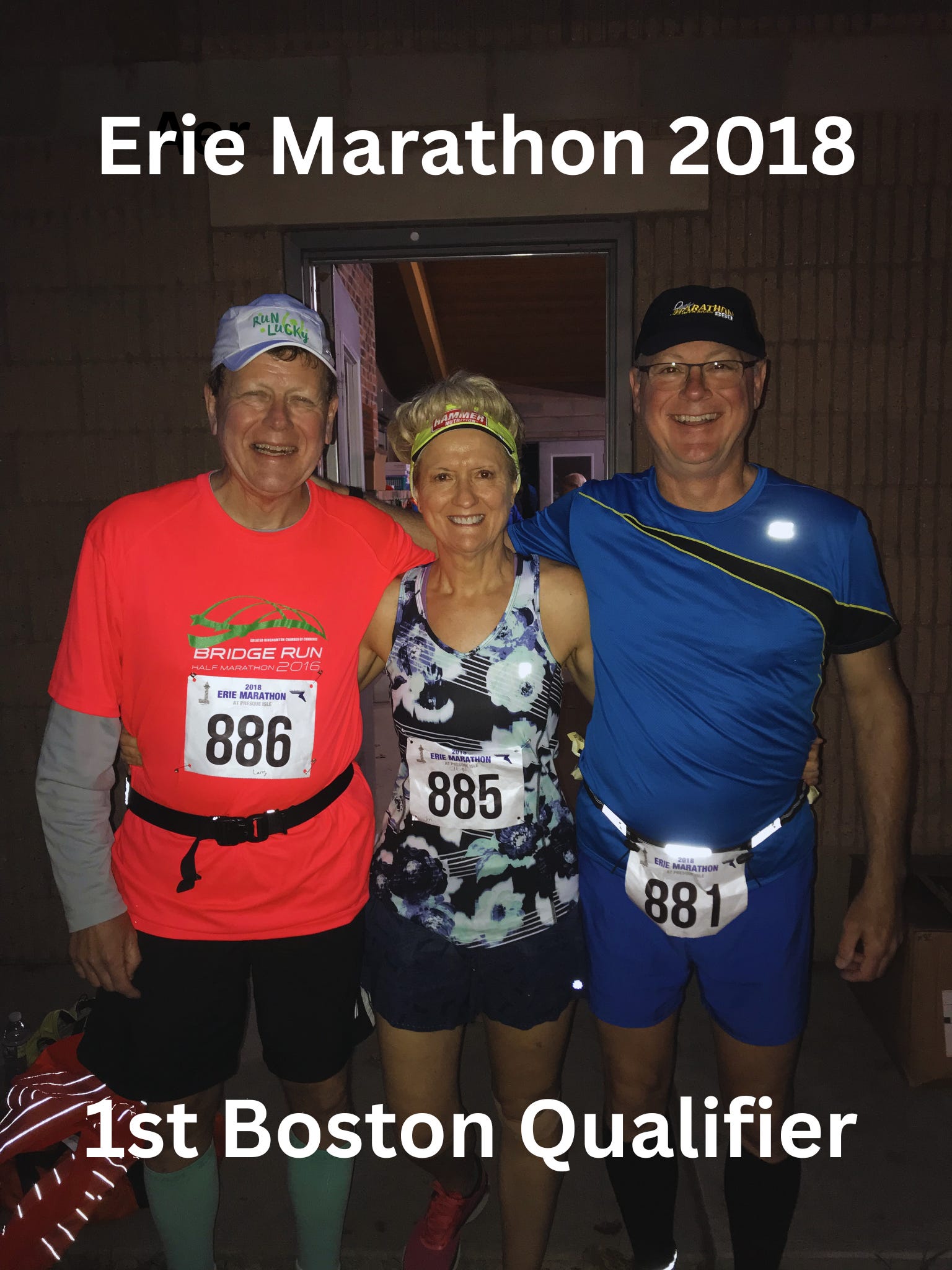
I came to running later in life and started out unsure of how far I could go. But over time, I kept increasing my goals as I became more confident. I think my biggest and hardest effort was spending three years devoted to running 5 to 6 days a week to qualify for the Boston Marathon — all in my early 60s. I ran the Boston Marathon in April 2022.
That journey to Boston taught me patience, discipline, and resilience. It showed me that progress takes time — and that no matter when you start, you can still achieve things you once thought were out of reach.
That’s what I’m most proud of.
What have you learned about yourself from your running journey? Is there anything that’s changed about you since you started?
I’ve learned to trust my body — and to listen to it.
When I started running, I focused on distance and goals. Over time, especially as I’ve gotten older, that shifted. Longevity matters more than pushing through at all costs. Some days I go farther, some days I pull back — and both are part of the process.
Running has also shown me that I’m more capable than I once believed, even starting later in life. Growth still happens — often just beyond what feels comfortable.
Where would you like to go with your running? Is there anything special you’d like to achieve — like, say, running all six World Marathon Majors, or running an ultra?
I’m currently working through an injury, which has shifted my focus. But I’m already thinking about the next chapter — hopefully a return to running another ultra.
What keeps you going? Especially if you’ve been running for a while — do you ever get bored with it? How do you find new things to motivate you, to keep you going?
What keeps me going is the pull of new trails and the simple desire to stay active — and to stay in shape for cross-country skiing, especially as I hope to do more long-distance ski events.
I don’t really get bored with it because it’s never just about running. It’s about being outside, exploring new places, and moving through the woods and mountains. That sense of discovery keeps it fresh.
Look back at yourself when you were a kid, maybe say 10 years old. Remember how you felt, what you thought, especially what you thought you were capable of back then. If you could talk to that kid now, what would you say?
I’d tell her to trust herself — and to be patient.
I’d tell her that you do not need to have it all figured out. Your love of the outdoors and the quiet confidence you are building will come together over time.
And I’d tell her to pay attention to her mom — to her strength, her independence, and the opportunities she created for you. That influence will carry you further than you can imagine.
Explore more from THM
There are so many more reader stories we’ve shared — don’t miss these:


Thank you Terrell for sharing my story. My mother's influence continues on today and every day. Starting over later in life seems to be a common theme even today in my life. I keep pushing the envelope of curiosity.
Very inspiring! I’m a half marathoner and have been sidelined with an Achilles injury for a few months. I’ve learned more about my feet, ankles and calves and that, combined with great PT, is getting me back out there. Logged 6 miles yesterday and, while I’m not fully “fixed” yet, I’ll keep at it. The Chicago Half in September is my goal. 🤞