


Afternoon, friends! ☀️ If you’ve been reading this newsletter for a while, you probably remember me putting out a call back in February to share your stories, your personal reflections on the journey of your life and what running has done for you.
Ever since, I’ve been blown away by what you’ve shared — and I feel like I’ve gotten to know each of you on an individual level so, so much better.
Today, you get to meet Glenda Mitchell, who was born in South Africa and later moved to Australia with her husband Walter, where they still live to this day. Walter was the first to take up running, and after watching him while she volunteered at races, she saw so many different kinds of people crossing the finish line she thought, “I figured if they could do it so could I.”
I loved Glenda’s entire story, but the kicker at the end is what really got me, and a reminder of how circuitous the journey is that life can take us on, and that sometimes we need to be reminded of where we started.
Please know I’d love to hear from you too! All you need to is reply back by email or in the comments below, and we’ll go from there. — Terrell
So, let’s hear a little bit about you! Who are you, your age (if you’d like to share), where you’re from, what you do, etc.
My name is Glenda Mitchell. I am in my late 50s, currently living in Hervey Bay, Queensland, Australia. I was born in Johannesburg, South Africa, and met my husband, Walter Mitchell, at university in a place called Pietermaritzburg, where we were married 34 years ago.
We were both studying for a Bachelor of Commerce degree and ended up with a major in Information Systems. It was in the day when PCs were largely unheard of and corporations had enormous boxes housing mainframe computers.
We moved to Sydney, Australia in 1995, and I worked for a number of the large management consulting firms as a business adviser to their corporate clients and in my own consulting business before deciding to move into internal corporate executive roles.
Following a health scare nine years ago, I did a re-prioritisation of my own life and decided to start a business to help others do the same. I am passionate about encouraging people to be intentional about choosing what they do and intentional about doing it.
Whilst living in Italy for a couple of years at the end of Covid, I wrote a book called Kicking Out the Bucket List: Living Life with Intention and Passion, using my own stories of adventure and achievement aimed at prompting others to work out what’s of value to them and to do it.
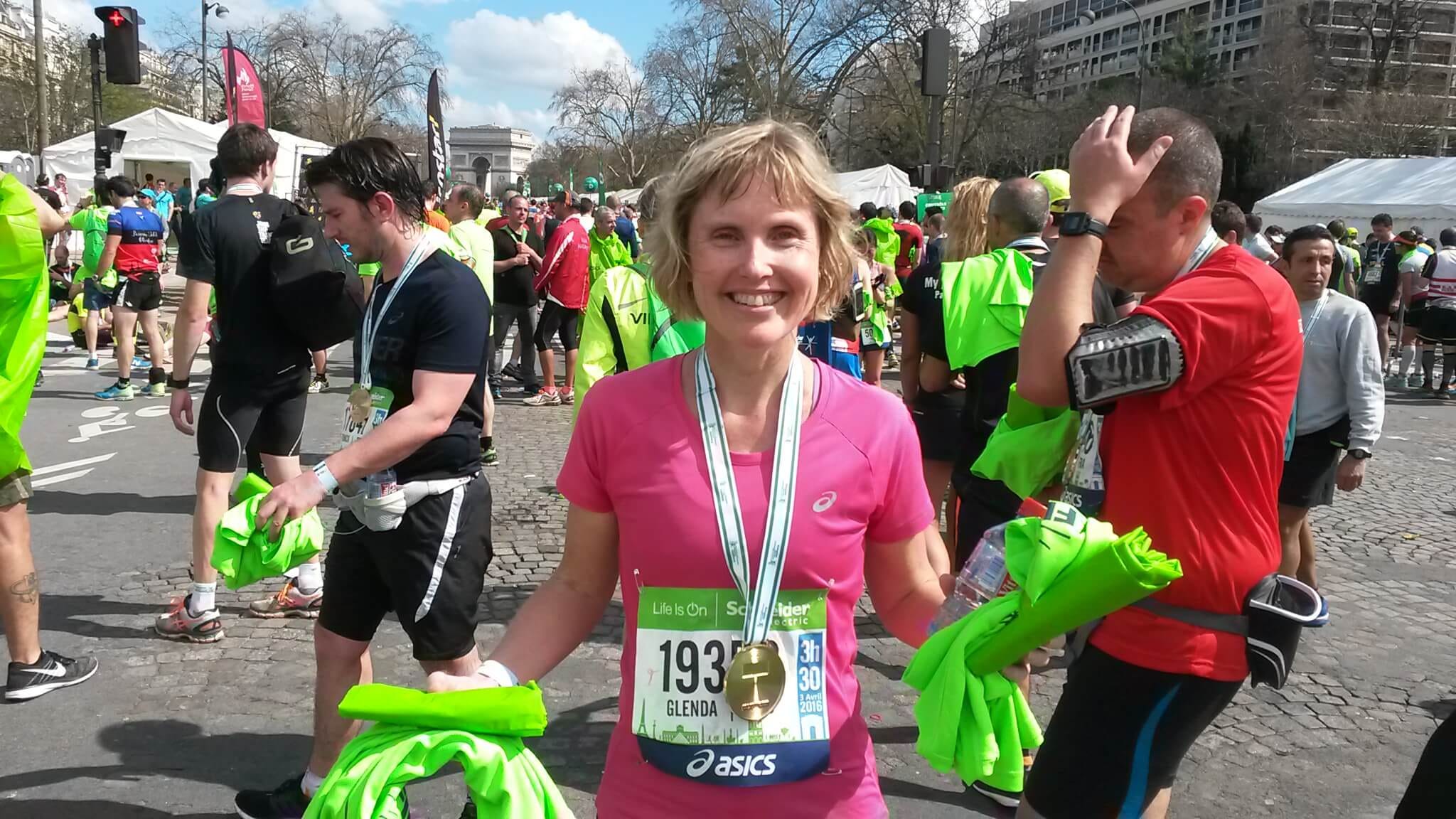
What does your running routine look like? How many times a week, and how far do you run?
This has changed over the years.
A long run for me these days is anything over 10 kilometers, usually a weekly 14 to 18K with a monthly half marathon thrown in for good measure. I then do another 3 to 4 additional runs per week, each about 8K.
I don’t do specific speed, interval or hill training any more, but do tend to incorporate some tempo time into some of my runs, use Parkrun for speed training and I have a few hilly Strava segments set up to test me.
In the past, my weekly long run would be 25 to 30 kilometers, (a bit more when leading up to a marathon event), backing up with a 15K the following day. I was never one for exceeding 100K per week.
I am equally happy on the road or trail, although generally do more road as it’s easier logistically. Currently I live near the beach, so some of my running is along the sand — compact, not soft.
What I do like about trail running is that I am so busy concentrating on the technical aspects or scenery that it almost feels easier. No chance to think too hard about what I’m doing or to get bored.
Were you an athletic kid growing up? What are your early memories of what fitness and health were about?
I grew up with two much older brothers so competed with them and didn’t really think of limits. I was always fit and active, everything from dancing to tennis and various team sports.
I was competitive in just about anything I tried. I won dance competitions, was on the top of tennis ladders and was the person that was chosen first for the netball team. If I was on my own at home I’d be throwing or hitting balls against the wall or swimming laps.
But as far as I was concerned, I was not born to run and running was not for me. It was only done when I had to in a school gym class.
How did you first get into running? Was there something that inspired you — like a performance at the Olympics, for example, or a runner you discovered by watching them on social media or TV? Or was there someone in your own life who inspired you to think, ‘maybe I can do this?’
It’s funny that you mention the Olympics as that is a bit of a can of worms. I grew up in South Africa under the apartheid regime, and we were under severe sanctions so were excluded from the world sporting stage, including the Olympics. My early years, we also had no television.
I often wonder how different my sporting life would have been had I been exposed to and inspired by the Olympians. I was always very competitive and felt I could do everything so if I had seen others competing, I suspect I may have been driven to give it a go. I was 28 when I saw an Olympic Games on TV for the first time.
That said, during my teenage years, I lived in Pietermaritzburg, the start and finish of the famous Comrades Marathon (90K) and used to volunteer at water tables or spend the day sitting alongside the road watching the race.
It was one day of the year that the whole country knew about running. One of my mother’s friends had a daughter who was first female on a couple of occasions and I admired her.
My husband was the runner. I used to sit and watch him coming in at marathons. After a number of occasions of watching everyone else – thin, fat, old, young etc, — make it over the finish line, I figured if they could do it so could I. I realised that I could learn to do so — as with any other sport.
How has your interest in running evolved since then? Do you run farther, or faster now?
When I started running, long before the days of Parkrun, 10 kilometers was a normal target. So that’s where I started. My initial training was walking / running two to three kilometers at a time and leading on from there. I was happy to complete my first 10K event without walking.
Later on, I was part of a running club called Sydneystriders and they were pretty serious. I was running a sub 45-minute 10K which was considered pretty slow and weekly social runs were 25K or more. I always said that I wouldn’t do a marathon, that I wasn’t interested.
One day, in the week leading up to a marathon that my husband had entered, I realised that having run these social runs consistently, I was ready to tackle the event. Not an approach that I’d recommend to most people but under the circumstances, it worked.
The furthest I’ve run is a 45K trail run with an elevation gain of around 1,500 meters and completed that a hand full of times. I had intended to run the Comrades Marathon about 10 years ago, but circumstances put paid to that.
I’m old now…
I used to run further and faster… now I run shorter and slower. That said, I still manage to hold my own amongst the recreational runners. I am very competitive in my age category and not too bad against the youngsters.
Now I enjoy helping others reach their goal and am always up for being a pacer at Parkrun or events such as half marathons. It also gives me an excuse for running slower!
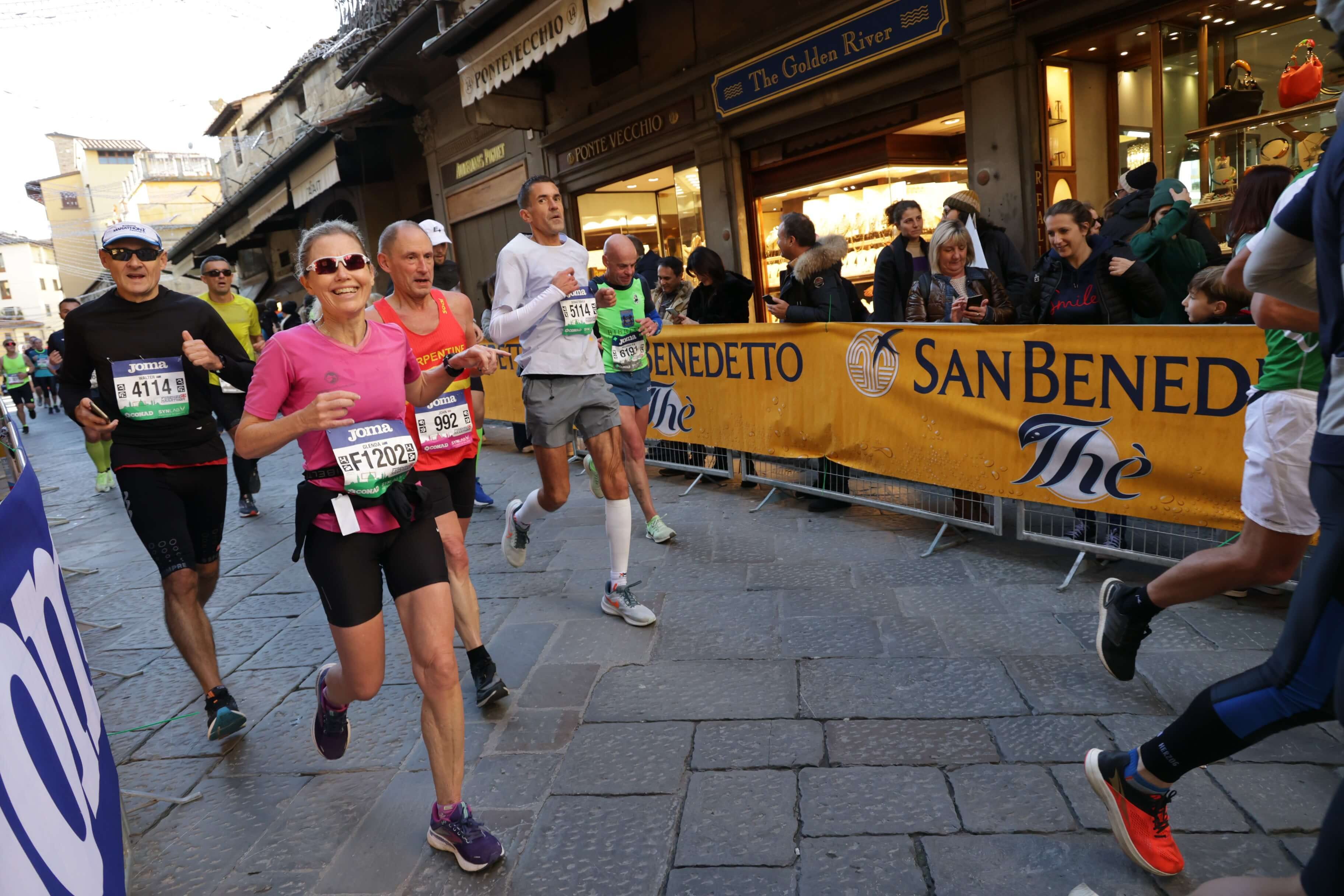
What do you balance your running with? Do you have a family to take care of? Kids, parents or other relatives or loved ones? If so, how do you balance all of it and still make time to run/care for yourself?
On the people side, I am fortunate that my husband is my running buddy. He’s faster than me but most of our training is done together, even if he leaves me towards the end.
My mother, who passed away recently at 93, was more of an encouragement than a drain. She was always interested in finding out about my running even though she had never been a runner herself. She knew that Saturdays were key run day do she’d always ask whether I’d done Parkrun or a long run that day.
My career was demanding. This often meant getting up in the cold, dark and wet to run before work. Sometimes it was of benefit as when I was travelling for work as running was an easy way to exercise. All I needed was a pair of shoes. When the others went to the pub, I could have some “me time” on a run.
It’s all about prioritisation. If it’s important make time, if not, that’s OK.
Is there anything you’re especially proud of that you can point to your running and say, ‘this helped me achieve ______’?
I’m not sure that I can identify one single thing but my running had contributed to my life in so many ways.
Physically, it has meant that I have been fit enough to take on activities when the opportunity arose. It meant that I could embark on my trek to Everest Base Camp and climb Mount Kilimanjaro without specific training. The unknown was more about altitude.
I’m not entirely sure whether I’d say my mental tenacity has come from pushing through to complete endurance events or whether or whether I’ve completed them because of my mental endurance — perhaps a bit of both.
And I’d say the same applies for most things I’ve embarked on, in work or life, including writing my book and having it published.
What have you learned about yourself from your running journey? Is there anything that’s changed about you since you started?
My running journey has spanned over more than 30 years, so it’s difficult to identify changes that would be directly attributable to running.
What I do know, is that my ability to keep running through injury & difficulty (some significant) is testament to my ability to endure and running has provided an outlet to keeping pushing through.
Had it not been for running, perhaps I’d be less tenacious and maybe even lazy. I’d no doubt be fatter.
Where would you like to go with your running? Is there anything special you’d like to achieve — like, say, running all six World Marathon Majors, or running an ultra?
This question implies that I am at a different stage of my running journey, so I’ll tackle it from a slightly different angle.
I have run marathons and half marathons across the world. I have chase PBs in various distances. I am now at a stage where it’s an achievement to remain fit. Most of the people around me are fatter, less able to even do much in the garden and walking for an hour is an accomplishment.
They certainly aren’t able to embark on a run. I would like to remain competitive in my age category. Next year I am planning on hiking the 192-mile Coast to Coast trail across the U.K. — whilst I may only run some of it, my running ability is likely what will pull me through.
Most importantly, I’d like to continue to inspire, and help motivate others to achieve their goals — whether it be starting to run when they didn’t think it was possible, doing a sub-three-hour marathon or competing an endurance event. Or even to achieve something that it totally unrelated to running or even exercise.
What keeps you going? Especially if you’ve been running for a while — do you ever get bored with it? How do you find new things to motivate you, to keep you going?
My initial answer: my inability to give up, my stubbornness. And that really is a big part of it. I can’t imagine life without running now. I often say that I run so that I can eat — I know that I’d get fat if I didn’t run, so I guess that’s a motivator.
Having worked with people of many types, I realise that others are motivated by very different things. Entering events, setting PB targets, finding new places to run are all ways of keeping going.
The thing to be aware of is that these things all give the dopamine hit but not necessarily the commitment. There are those that are happy to run a marathon and that’s it — and there’s nothing wrong with that, it’s a huge achievement.
But then there’s those that are serial runners, running because they run. I fit into the second category.
Look back at yourself when you were a kid, maybe say 10 years old. Remember how you felt, what you thought, especially what you thought you were capable of back then. If you could talk to that kid now, what would you say?
At 10 years old I thought I was invincible, that there was absolutely nothing I couldn’t do. I was fortunate that I had parents that encouraged me to learn, to grown, to reach for the stars.
I have largely retained the fearlessness that I had back then, but have a lot more self-doubt now. If I could talk to that kid now, I don’t think I’d look to change a thing. I’d more likely talk to the older version of me to remind myself of the 10-year-old kid.
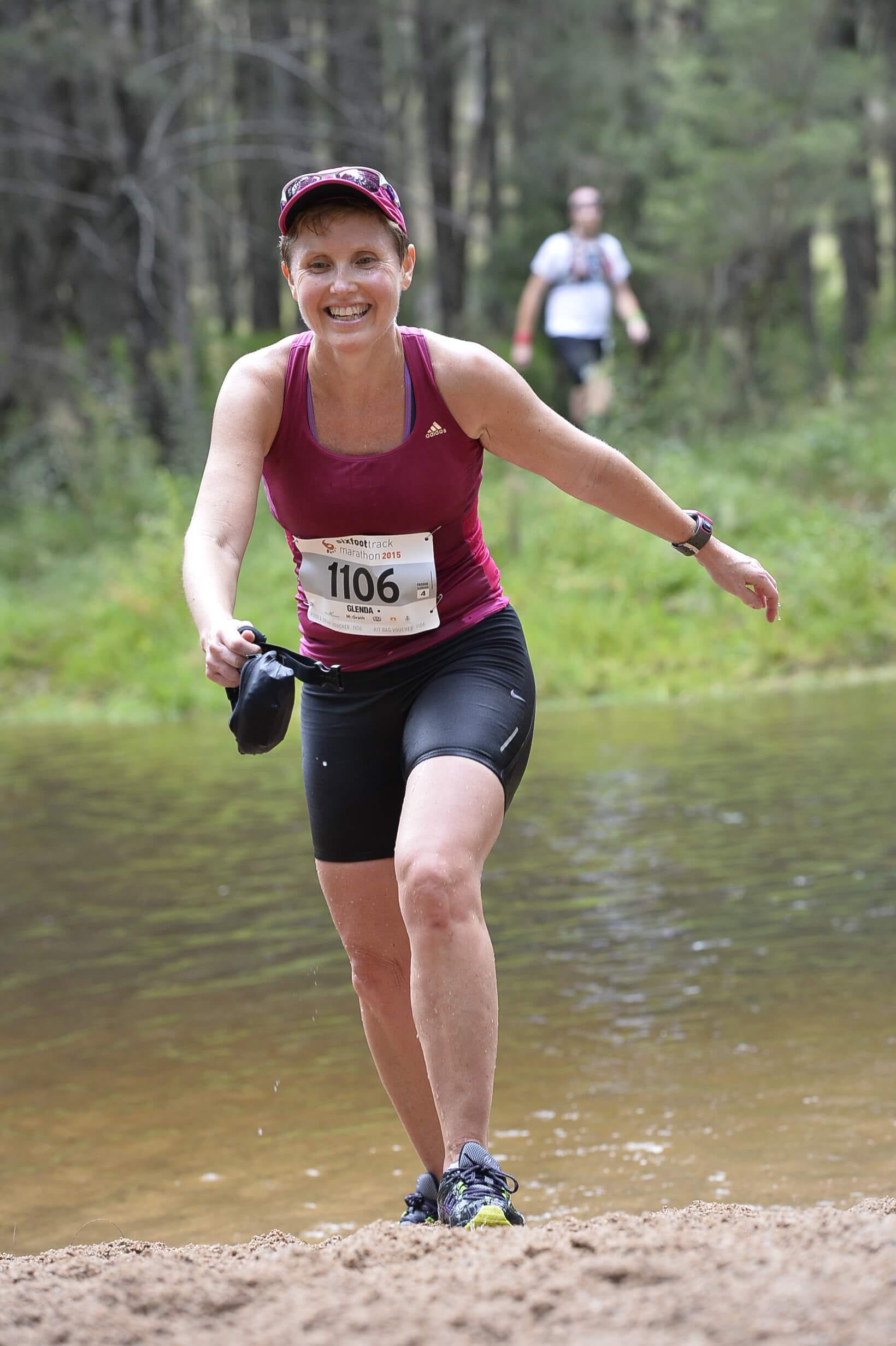
Explore more from THM
There are so many more reader stories we’ve shared — don’t miss these:


I call myself a fast old lady runner! I just turned 59.
I really believe my best running days are ahead of me, and like you, I'm at the age where I can see what running has brought me in terms of physical health, stamina, energy and joy.
Good for you.
Love your self-awareness, insight, authenticity and grit. Thanks for sharing. Inspiring...