


Morning, friends! ☀️ You may remember that back in February, I put out a call to share your stories. Since then, we’ve heard so, so many amazing stories from our group, and I’ve gotten to know each of you so much better.
Today, you get to meet John Maynard, who grew up in Southern California and led an active lifestyle as a kid, playing different sports every season. He didn’t even think about running until the year his father decided to join a running group and run a half marathon — an “unreal” distance, he thought at the time.
Later, in his twenties, he’d decided to follow in his dad’s footsteps and try running for himself — until his training was derailed by a horrific car accident, which he by a miracle survived. However, months in the hospital — including a brief, medically-induced coma to reduce swelling in his brain — lay ahead.
A lot of soul-searching followed, John says, but he found his way out and today is running distances far longer than the half marathon his father ran. He’s also found a path forward that allows him to pursue his dreams in running while still also maintaining balance with the other parts of his life.
I really, really enjoyed John’s story and I know you will too — and, if you feel inspired to share yours, I’d love to hear it. All you need to is reply back by email or in the comments below, and we’ll go from there. — Terrell

So, let’s hear a little bit about you! Who are you, your age (if you’d like to share), where you’re from, what you do, etc.
First and foremost, I’m a dad and a husband. My wife and I are doing our best to raise two independent, smart, fierce, and caring daughters (now 17 and 14) with strong moral compasses. They take after their mom.
I grew up in the San Francisco Bay Area, but I’ve spent most of life in Southern California, specifically between San Diego and northern Los Angeles. During the pandemic, we relocated from L.A. to Orange County for a career change in biotech.
I’m 47, but I still feel like a kid. Though I have all the responsibilities of a professional, including a mortgage that’s commensurate with living near the beach in So Cal, I still don’t know what I want to be when I grow up.
What does your running routine look like? How many times a week, and how far do you run?
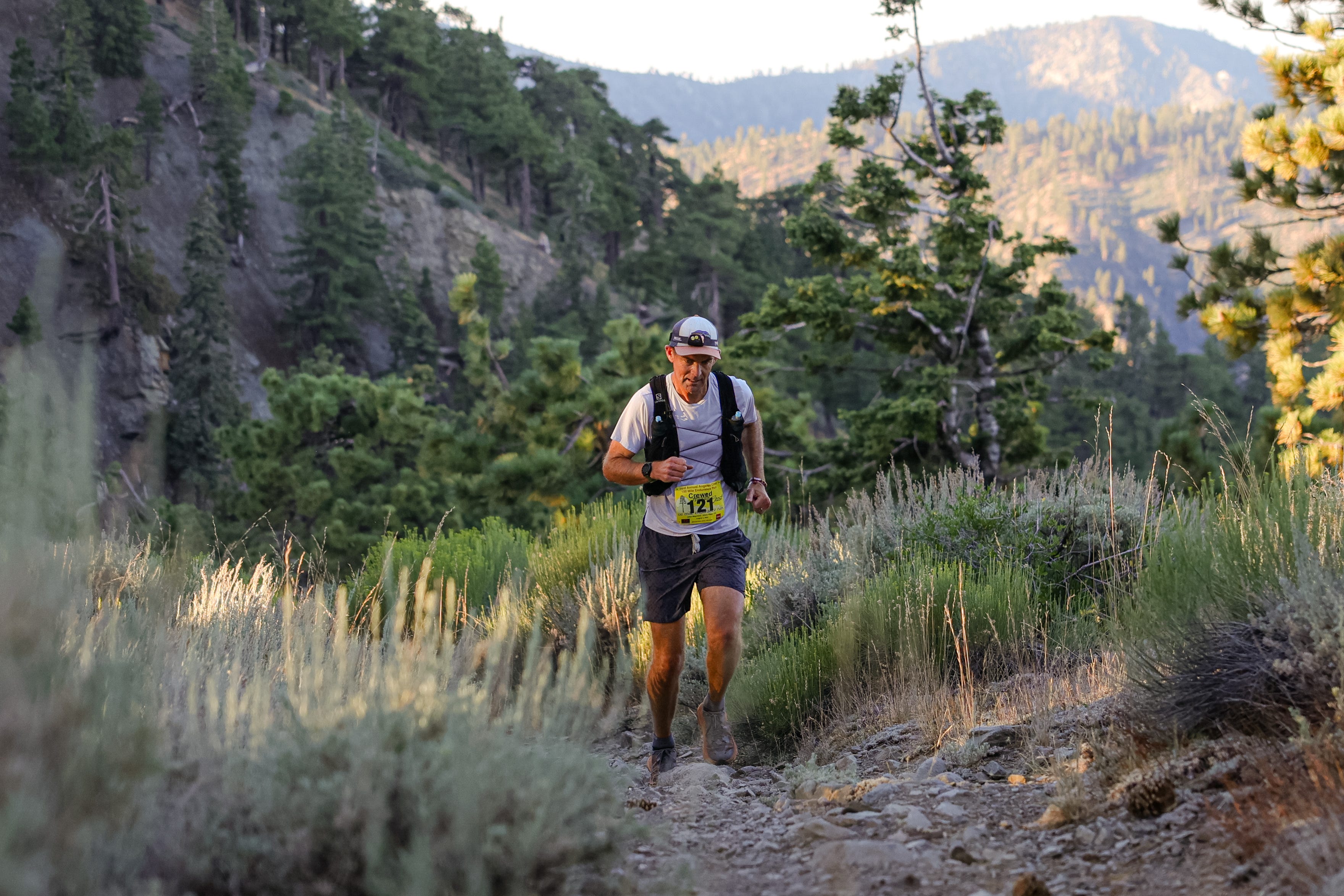
As an ultra-runner, I typically run six days per week, with Monday being a rest day. (I find little value in run-streaking.) My weekday runs are usually six to 12 miles, and my weekend long runs range from 14 to 28 miles.
However, as I write this, I’m coming off an injury, so I’ve incorporated more biking and cross-training into my routine. Regardless of the workout, six days a week, I wake up by 4:15 to exercise.
Were you an athletic kid growing up? What are your early memories of what fitness and health were about?
Though my wife was probably a better athlete than I was (she definitely had a better jump shot), I’ve played sports my entire life. While I loved sports, I didn’t specialize in any discipline (back in the 80s and 90s, we California kids played the sport of the season: soccer in the fall, basketball in the winter, baseball in the spring, swim team in the summer).
I high school, I played four years of varsity soccer, three years of varsity golf, and during my senior year, I finally relented and played high school football, where we were league champs and my strong leg earned me the distinction of first team all-league kicker (“Just imagine if you had played all four years?” my dad exclaimed, somewhat disappointedly).
But my true passion as I got into my teens was surfing. It was the first time that I connected to a sport in a physical, mental, and spiritual way — and the first time a sport brought me close to nature.
I loved the challenge that surfing presented: the unpredictability, the strength and courage it demanded, the patience it required, the danger, the unknown. But above all, the beauty. There is truly no feeling like getting barreled. Though the moment is fleeting, time pauses and everything is calm and in sync.
My passion for surfing led to me to enroll at the University of California-San Diego, as it was not only an excellent school, but it also sat on the bluffs overlooking Black’s Beach, hands down the best beach break in the country.
How did you first get into running? Was there something that inspired you — like a performance at the Olympics, for example, or a runner you discovered by watching them on social media or TV? Or was there someone in your own life who inspired you to think, ‘maybe I can do this?’
When I was a kid, my dad ran with the Hash House Harriers, the international running group whose members get together for some wacky runs and then drink beer afterwards (and probably during the run, too). My dad also ran a half marathon. As a grade-schooler, I thought that was unreal.
I think that opened my eyes to what might be possible. In fifth grade, our school had a walk-a-thon, and the grand prize was a season’s pass to California’s Great America. As we set off around the schoolyard to do our first lap, I decided that I’d run it, because I wanted to win that prize. I probably ran-jogged-walked 17 miles that day. I was beat up, but I won that season pass.
Of course, my real running journey didn’t start until after I earned my undergraduate degree. With college barely in the review mirror, I decided in 2001 to run a half marathon — just like my dad had. I had no idea what I was doing, but I printed out a 13-week training plan from Runners World and got working.
On race day, I showed up in basketball shorts and a white Hanes undershirt. I didn’t have a plan, but I gave it my best and ended up running a 1:33. I also had the worst chafing ever!
As we turned the calendar to February 2002, I began to train for the San Diego Rock ‘n’ Roll Marathon. This was before Strava, GPS watches, and high-carb fueling — and I was still clueless. But I had a goal in mind, and I followed my 16-week plan to a T.
Though I was ready, life had other plans.
Six days before the marathon, I went on a joyride with my roommate in his dad’s super car. He overestimated his skills, and we slid into oncoming traffic on the windy roads of Rancho Santa Fe, going at least 90 mph. We were t-boned on my side of the car. The force of the impact smashed the passenger side of the car, where I was sitting, into the driver’s side.
The firefighters used the jaws of life to extract me from the car, and they called a helicopter to rush me to the hospital.
The brunt force left me with broken ribs, a fractured cheek bone, collapsed lung, strained knee and shoulder, facial lacerations, and a traumatic brain injury. To mitigate the swelling, they put me in an induced coma. I stayed in the hospital for a month, where I relearned to chew, swallow, stand, walk, read, and write. (I also learned that you don’t store milk on a nightstand and you can’t escape a hospital when they’ve strapped a monitor around your ankle.)
Over the next several months, I did physical therapy, speech therapy, and occupational therapy. Under constant, 24/7 supervision, and told what I could and couldn’t do, I felt hamstrung. I couldn’t sleep for more than two hours at a time, and I managed a bout of depression.
In short, I felt sorry for myself, and I yearned for sympathy and for someone to tell me that it was okay that I wasn’t as good as I used to be.
Then over Thanksgiving, while visiting relatives in the Pacific Northwest, one of my dad’s cousins asked about the accident. I did have any memory of the accident, let alone the weekend before it, but I recounted what people told me had happened.
“Sounds like you had a moment of indiscretion,” he said.
At first, I felt betrayed. I was livid. I wasn’t driving! I thought. I was just a passenger. Why would I be to blame? How was I the careless one?
On our trip back to California, I thought about our conversation. It hit me: He’s right. My roommate wasn’t being malicious. He knew that I loved cars, and he just want to show off the car. And I chose to get in the car. I wanted to go for the ride.
That interaction changed everything for me, and it put me on a course to fast-track my recovery.
Six months post-accident, over Christmas 2002, I decided that I was going to run the San Diego Rock ‘n’ Roll the next year. In February 2003, I began marathon training. In June 2003, I finished it — one year late — in just over 3:29.
How has your interest in running evolved since then? Do you run farther, or faster now?
After finishing that first marathon in 2003, I wrote off covering that distance again. Though I met my goal of going sub-3:30, I didn’t love the lifestyle change required to train for and run 26.2 miles.
Fast forward two kids and 12 years later — and running found me again. My older daughter had just started playing AYSO soccer, and her coach told me about his goal to run the Boston Marathon. I hadn’t run further than 13.1 miles in more than a decade, but I put a new, ambitious goal on my calendar: to qualify for Boston.
After two failed attempts — including one massive flame-out in fall 2016 — I finally earned that covered BQ and punched my ticket to the 2018 Boston Marathon — the same harrowing race Des Linden won in the middle of a deluge.
Running Boston was a dream, but at the same time, the YouTube algorithm began to serve up documentaries about 100-mile races. So, naturally, my focus turned to ultra running.
In 2019, I ran my first ultra marathon, the Leona Divide 100K (62 miles), which takes place in the mountains in northeast Los Angeles County, along the famed Pacific Crest Trail. Though I was over my skis, I thoroughly loved my experience, as I met some of the best humans on the planet during those 12 hours of joy and pain and shared suffering.
From there, I’ve gone on to run all kinds of distances in the mountains, from “short” 50K races to long 100-mile races that call on runners to dig deep and problem-solve on the fly.
What do you balance your running with? Do you have a family to take care of? Kids, parents or other relatives or loved ones? If so, how do you balance all of it and still make time to run/care for yourself?
I don’t think my running journey is about balance. It’s about prioritization, commitment — and also communication. Training for ultras, while also being a dad to two girls and a husband, means that there is little time to waste.
It’s less about balance and more about fitting all of the pieces together. I try to make sure my training impacts my family the least. That’s why I get up at 4:00 a.m. to train.
On weekdays, I’m home from my runs before anyone wakes up. On the weekends, I also start my runs early — and just how early depends on my daughters’ sports schedules. If I have an 18-mile trail run, and they have to be at the field for a soccer game by 8:00 a.m., it means I’ll need to start my run by 4:00 a.m., sometimes as early as 3:30 a.m.
And, I’m always careful not to let my training adversely impact other responsibilities, like home repairs, yard work, grocery shopping, cooking, etc. In fact, I consider it all part of the training (you know, time on feet).
Is there anything you’re especially proud of that you can point to your running and say, ‘this helped me achieve ______’?
Running (and ultra-running, in particular) has taught me so much — about myself and others. During an ultra, when the total distance seems far, if unthinkable, you learn to break the event down aid station to aid station. And, when even the 8 to 10 miles between aid stations seems overwhelming, you break the task down even further. Keep moving forward, and pretty soon you’ll be eating boiled potatoes and watermelon at the next aid station.
I’ve been able to translate this approach to my professional life. When the project seems to big, I’ve learned to calm down, take a beat, and break it into bite-size chunks.
When you’ve overcome existential crises that accompany 100 milers, major projects aren’t that big of a deal.
What have you learned about yourself from your running journey? Is there anything that’s changed about you since you started?
Maybe it’s a result of getting older, but if there’s one thing I’ve learned from all this running is patience and the compounding power of stacking bricks. Often, the work we’re doing today pays dividends not today or tomorrow, but well into the future. By showing up consistently, we keep adding, to paraphrase Courtney Dauwalter, grains of sand to our pile of fitness.
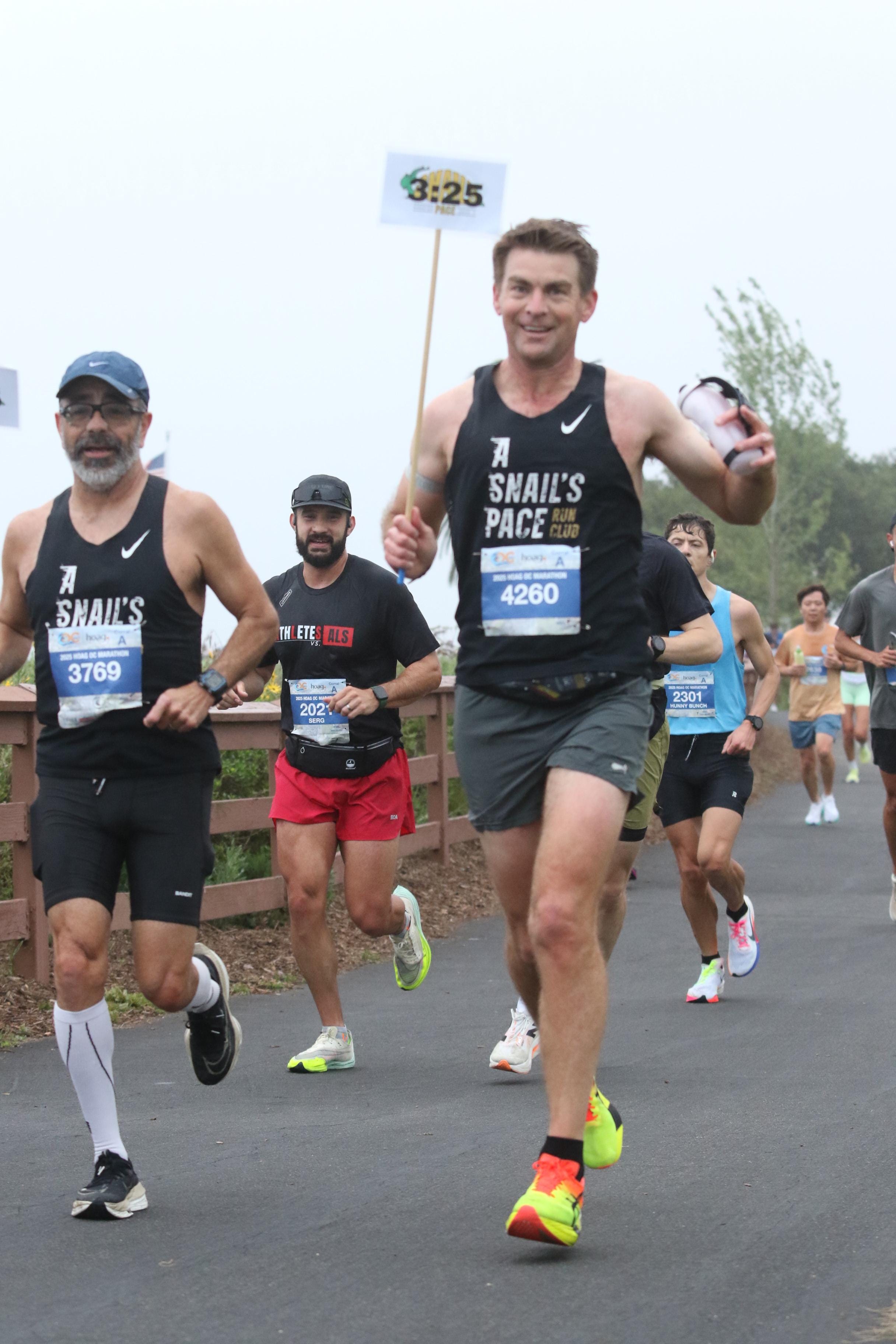
In February, I realized this philosophy when I paced the 3:10 finish at the Surf City Marathon. Three weeks before the event, a good friend of mine asked if I wanted to pace. The only slot they needed to fill was the 3:10 finish (which means running a pace of 7:10 per mile).
I didn’t know I had that kind of speed in my legs, but I agreed to give it a go. Mostly because I was curious. Somehow, I pulled it off, and though it wasn’t my fastest marathon, I ran in my eyes a perfect race, finishing with a two-minute negative split.
Where would you like to go with your running? Is there anything special you’d like to achieve — like, say, running all six World Marathon Majors, or running an ultra?
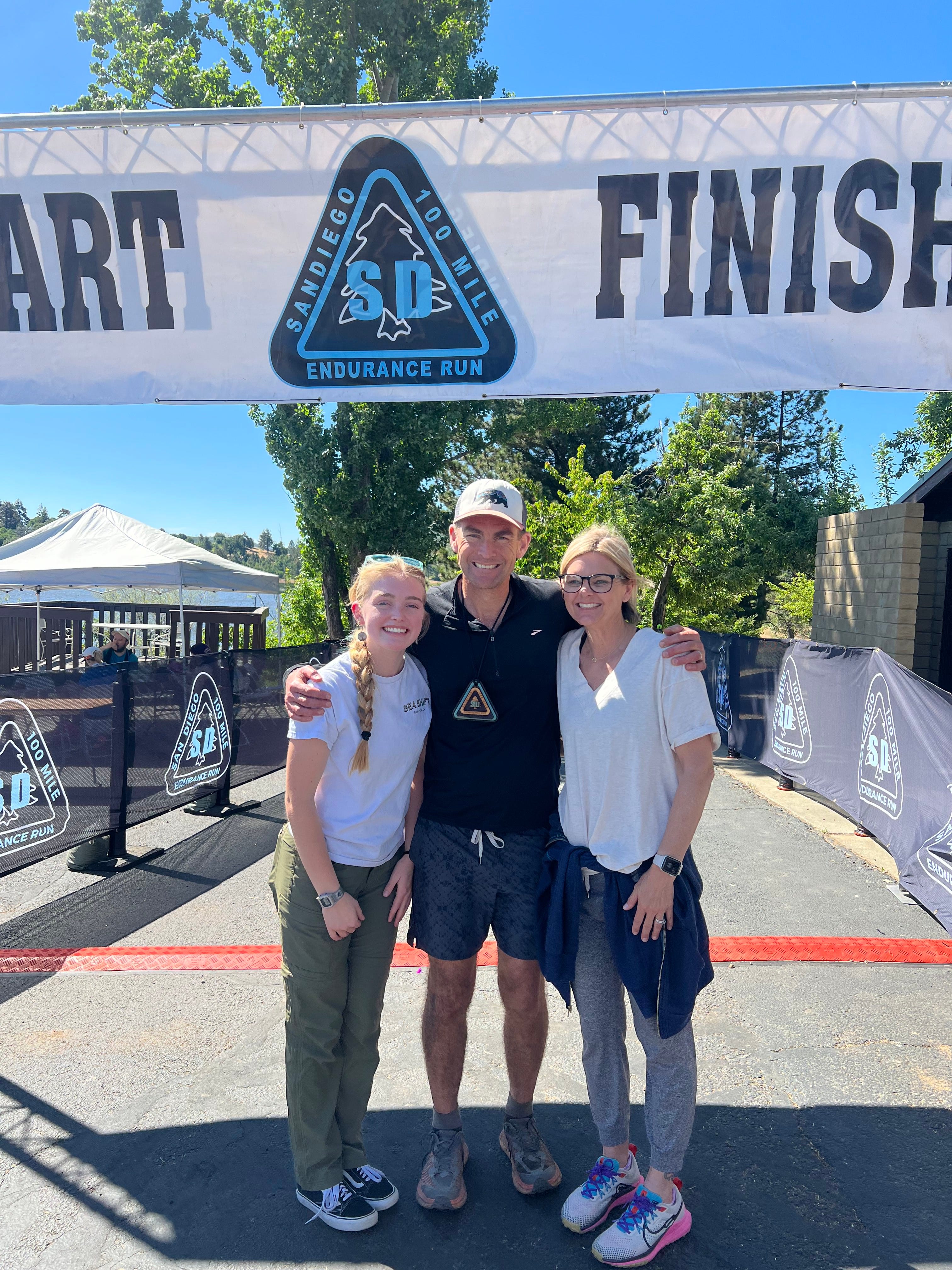
I’ve hit all the milestones that I’ve wanted to hit: sub-3-hour marathon, three 100-mile ultra finishes, the Boston Marathon, etc.
But I still have two races on my bucket list: the Western States Endurance Run and the Leadville 100 Trail Run, the two oldest 100-milers in the country.
Above all, however, I’d like to be a lifelong runner. And, this is sort of pie-in-the-sky, but I’d love to run an ultra with my daughters (job one is to get them to crew me first).
What keeps you going? Especially if you’ve been running for a while — do you ever get bored with it? How do you find new things to motivate you, to keep you going?
For nearly a decade, running has become a bigger part of my life. Since 2016, I’ve averaged at least 2,000 miles per year running. Last year marked my biggest year to date, with more than 2,600 miles and 300,000 feet of elevation gain.
It’s the adventure and the opportunity to improve that keeps me engaged with this pursuit. At 47, I know I will start slowing down… eventually. Until then, I’m going to keep noodling with this whole thing. Running hurts. But it’s also a darn good way to start your day.
Look back at yourself when you were a kid, maybe say 10 years old. Remember how you felt, what you thought, especially what you thought you were capable of back then. If you could talk to that kid now, what would you say?
When I was ten years old, I don’t think I doubted my capabilities. Not because I was a cocky kid, but because I didn’t know any better. At 23, when I finished that first half marathon in 2001, I thought that no one had ever run that far in the history of the world. (I was such a hero!)
When first heard about ultras, and specifically 100-mile races, I thought no way! How in the world do people run that far?! That’s insane. I couldn’t ever do that.
But sometimes the best way to change your perspective is to do the thing that you think is impossible, to prove yourself wrong. And, if you put in enough work, keep showing up, and commitment to your goal, you’ll learn that what at first seemed unfathomable is just a matter of left foot, right foot. Left foot, right foot.
We’re all capable of achieving great things. We just have to want to.
Explore more from THM
There are so many more reader stories we’ve shared — don’t miss these:


I loved all of this but particularly this passage:
"At first, I felt betrayed. I was livid. I wasn’t driving! I thought. I was just a passenger. Why would I be to blame? How was I the careless one?
On our trip back to California, I thought about our conversation. It hit me: He’s right. My roommate wasn’t being malicious. He knew that I loved cars, and he just want to show off the car. And I chose to get in the car. I wanted to go for the ride.
That interaction changed everything for me, and it put me on a course to fast-track my recovery."
Brilliant self-awareness and congratulations on all your achievements! (Sidebar: My first and only marathon was the San Diego Rock & Roll a day before my 46th birthday a couple years after you... It was great.)
John Maynard, all I can say is WOW and may you one day run that most meaningful of Ultras, the one with your daughters. We are all looking to find our "tribe within the tribe". Looks like you have done that with the Ultra Running Community. Congrats‼️👣‼️