

Evening, friends! 🌜
It’s nighttime, I know, so I won’t dilly-dally too much other than to say, I can’t wait for you to meet this week’s interview, Matt Massett.
Maybe it’s because we’re the same age (55), or maybe it’s because we’re at the same stage in our careers, or maybe it’s because we have children of similar ages, but so much in his story resonated with me.
Matt has been through ups and downs — as he puts it, he was once “a 300‑pound drunk who smoked,” for whom anything athletic was a distant dream. But he didn’t let it stop him.
I’ll let Matt tell the rest of his story, which I know you’ll love too — as always, keep in touch on how your running/life is going. — Terrell
So, let’s hear a little bit about you! Who are you, your age (if you’d like to share), where you’re from, what you do, etc.
My name is Matt Massett. I was born in Chicago and still live in the suburbs. I’m fifty‑five years old, married, with three children — ages 25, 10, and 4 — and they’re the reason behind anything I do.
I work from home as an IT infrastructure supervisor, with thirty years of liking computers more than humans.
What does your running routine look like? How many times a week, and how far do you run?
I run three to five times a week, depending on what I’m training for. I like to pick at least one race a year just to have something on the calendar. My recovery runs are usually about 30 minutes or 5K, whichever comes last.
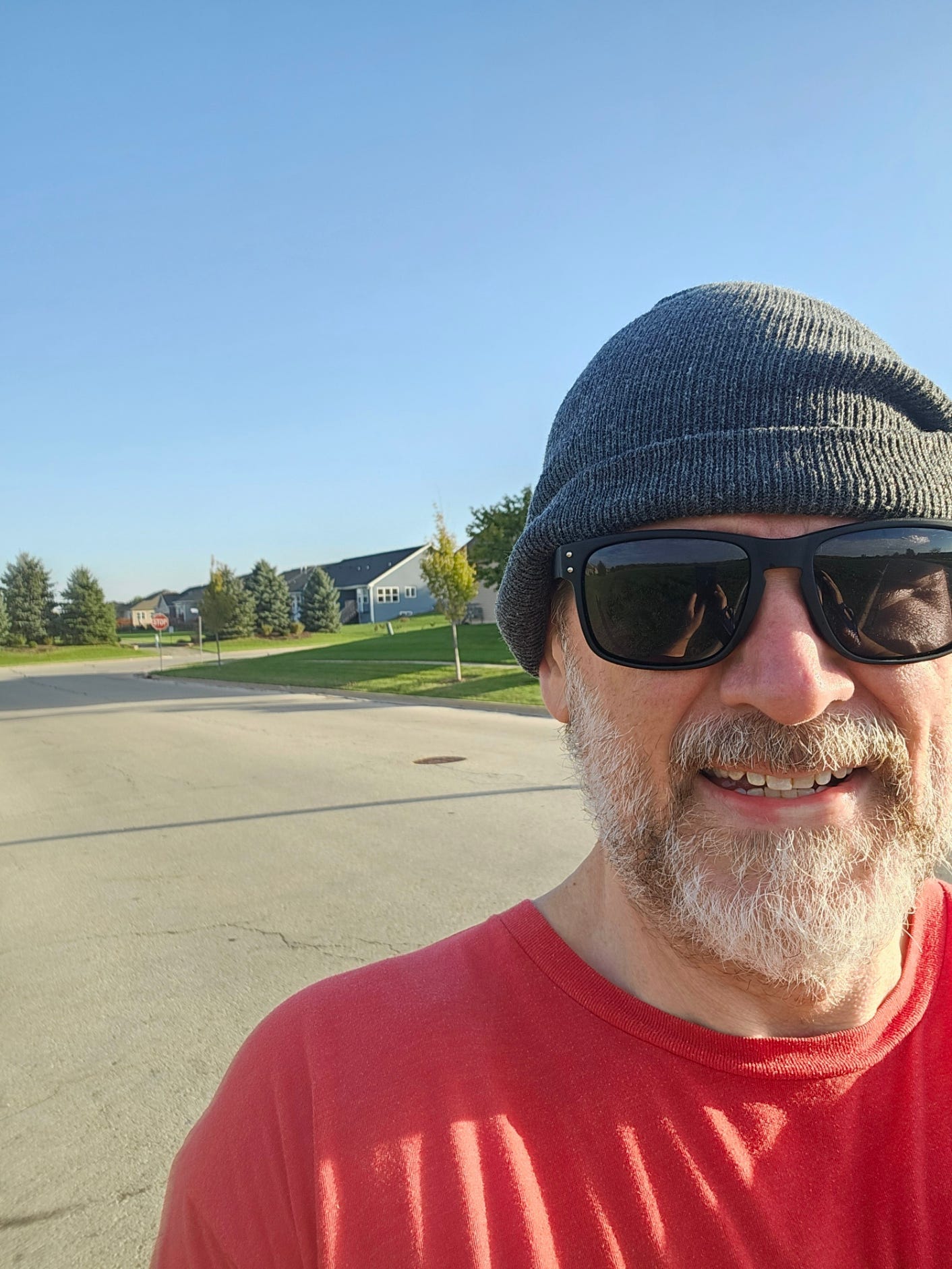
Running is my happy place. I love early morning solo runs — clearing my head, cooling down while catching up on my phone, doing my devotionals, then tai chi in the undeveloped strip mall area behind my subdivision. If not outside, I’m on the treadmill in my basement.
Two years before COVID, I ran my first 5K. The year after that, I ran my first 10K. And during COVID, I ran my first virtual half marathon — in forty‑foot circles in my basement, switching directions every ten minutes.
I’m a late bloomer. I’m 13 years clean and sober now, but before that I was a 300‑pound drunk who smoked. Running wasn’t exactly accessible. My sobriety date and the moment I started seriously running are no coincidence.
Were you an athletic kid growing up? What are your early memories of what fitness and health were about?
Oh my, no. I loved recess and kickball, and pickup football and basketball at the park, but even in the 70s and 80s I was a video gamer — happiest on the couch.
I started lifting weights toward the end of high school, but didn’t get serious until my first child was born [when I was] thirty. That’s when I first tried running. I wanted to be a runner long before I ever actually tried.
I was a burnout in high school — long hair, heavy metal, trouble. No sports. My family joked, “Those who cannot do, teach. Those who cannot teach are custodians. After that, well, we always need gym teachers.”
Growing up with that didn’t make me athletic. My dad still warns me that working out makes you a “slave to your body.” My family believes running empties some internal tank that can never be refilled.
How did you first get into running? Was there something that inspired you — like a performance at the Olympics, for example, or a runner you discovered by watching them on social media or TV? Or was there someone in your own life who inspired you to think, ‘maybe I can do this?’
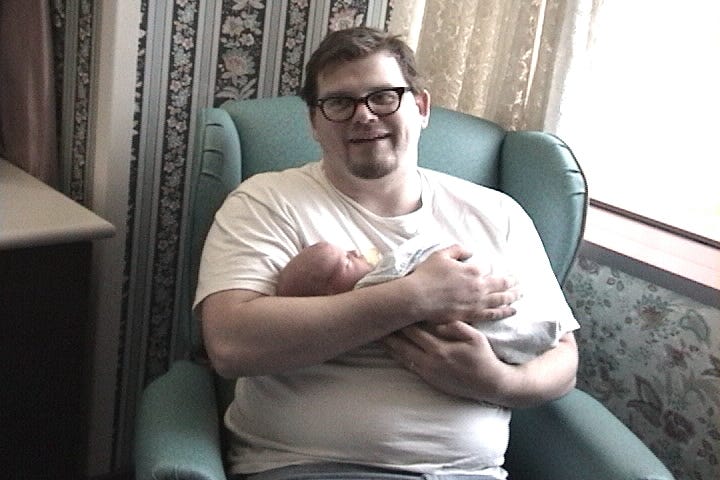
I was 300 pounds and out of shape mentally and physically. When my first child was born, I realized it wouldn’t take a serious athlete to take my child out of my arms and run away — and I wouldn’t be able to do anything about it.
That scared me.
I also had this long‑simmering fantasy of running a marathon. I wanted to be a runner. I didn’t know what that meant back then — I just thought saying “I run marathons” sounded cool.
It’s been a long uphill battle to become a runner. But I feel like I’m in the best shape of my life and have at least another fifty‑five years to go.
How has your interest in running evolved since then? Do you run farther, or faster now?
Much farther and faster. Every new year I’m shocked I’m putting on more miles and shaving down race times.
How I run has evolved too. I laugh at the things I used to think I had to bring on a run. Now it’s just shoes, shorts or tights, a shirt or two, a hat, music, and a good tracker.
After cataract surgery, UV‑blocking sunglasses became mandatory. My phone armband is three years old and probably two years past being functional for an ultra‑sweaty guy like me.
Last year I had hernia surgery and couldn’t wait to get back out. As soon as I was cleared for walks, I was out for hours. Then the weighted vest. Then the first run. Then a couple weeks off because it was too soon. But it worked out — within two months I ran a 10K and joked that hernia recovery was just training.
My addictive personality — the one that earned me “if some is good, more is better” on my tombstone — just moved from smoking, drinking, and drugs to running.
What do you balance your running with? Do you have a family to take care of? Kids, parents or other relatives or loved ones? If so, how do you balance all of it and still make time to run/care for yourself?
Family, definitely. Work gets in the way less and less. I’m at a point in my career where I can show up late to a meeting in sweaty running clothes and people applaud my dedication.
My wife is the most supportive person I’ve ever had in my life. She pushes me to run, train, and race because she knows it’s what I need to be me. She’s training for a 5K now and has run races herself over the years.
When our daughter was a baby and my wife needed sleep, I trained for months in the basement while my daughter talked and played in her playpen. Those runs weren’t glamorous, but they were ours.
I’m not saying it’s sacrifice. I’m saying my wife and children are the only things that ever move my running schedule.
Is there anything you’re especially proud of that you can point to your running and say, ‘this helped me achieve ______’?
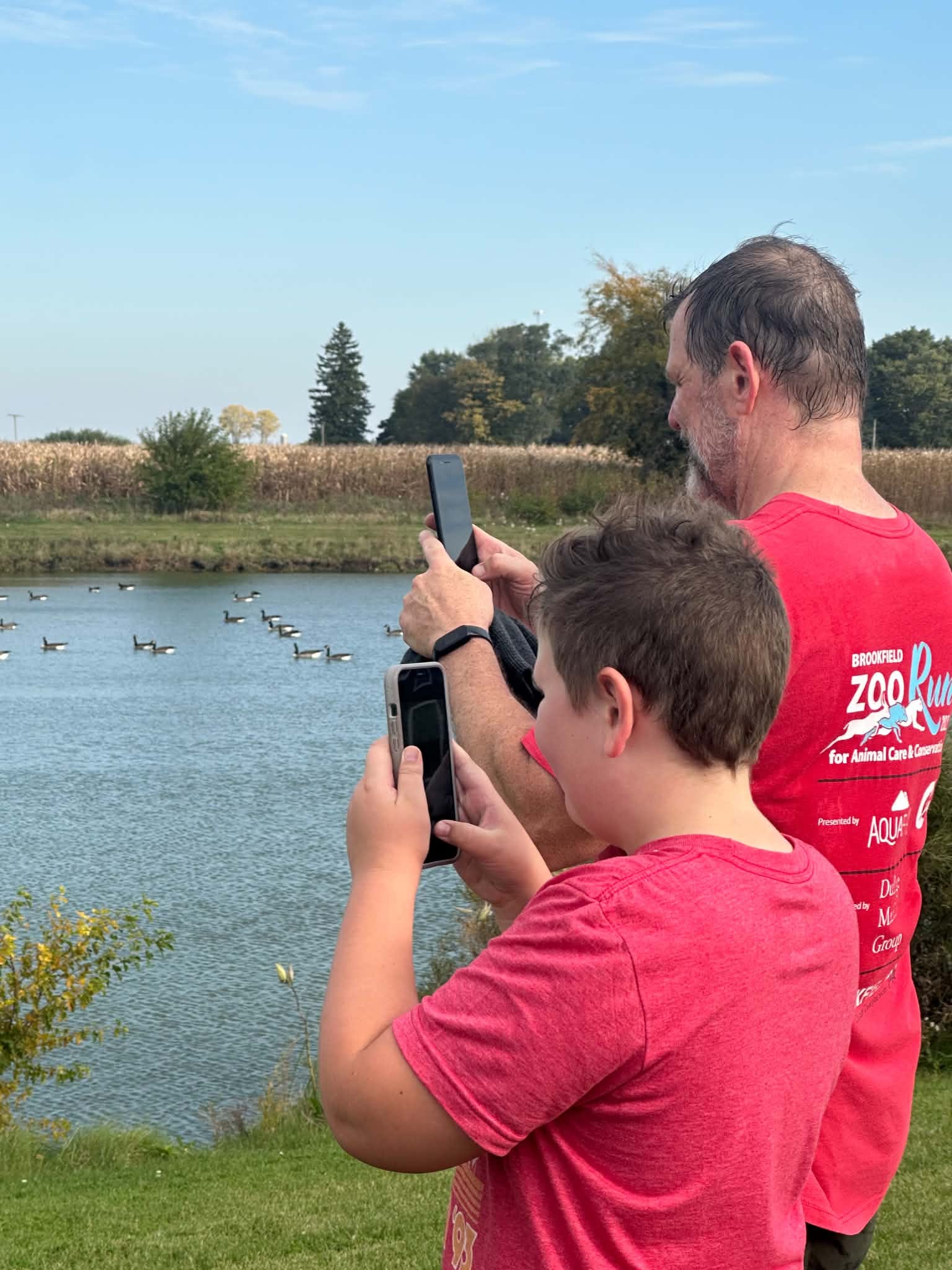
I’m coaching my 10-year-old’s football team and my 4-year-old’s soccer team. I never would have done that without running.
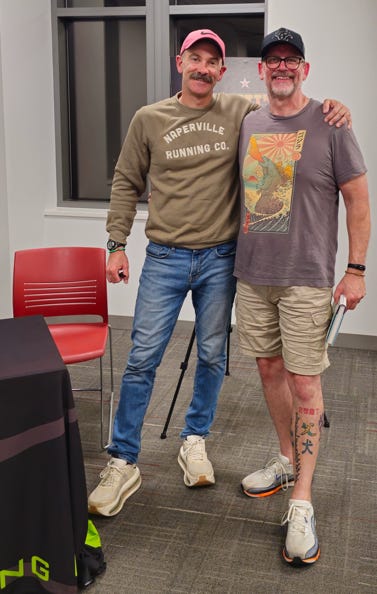
Running led me to running apps, Nike Run Club especially, and that led me to listening to actual running coaches. I wanted that — after being coached for years — to be a coach.
I want to motivate and coach someone until I’m out of a job and they can coach themselves. It’s more than sports. I want to hear their stories. I want them to hear mine. I want to laugh and cry and run.
I went from anti-social, anti-jock, spit-on-the-ground-when-someone-mentions-coach to wanting to be that person.
Running alone so much made me realize I need more people, not fewer, to share running with. Lately I’ve even started thinking about organizing a running group in my subdivision. That’s not something the old version of me would have ever considered.
What have you learned about yourself from your running journey? Is there anything that’s changed about you since you started?
I care about myself. I get healthy and want to get healthier. My mental health improves and I don’t need to sabotage that.
I share more with people now. I’ve talked to myself so much while running that talking to others like they’re not strangers feels natural.
Running gives me connection — even through solo runs.
Where would you like to go with your running? Is there anything special you’d like to achieve — like, say, running all six World Marathon Majors, or running an ultra?
I’d like to run an actual marathon. Running an official half rattled me — I’ve run longer, but not in a race. Something about the race setting threw me.
I want to keep running until I can’t. And even then, I want to push it.
I’m never going to win a race, and I’m good with that. At some point, I want to have the best time for my age at 120.
What keeps you going? Especially if you’ve been running for a while — do you ever get bored with it? How do you find new things to motivate you, to keep you going?
I wander away from running sometimes and don’t realize it until systems start acting up — physical and mental.
Some winters I lean into gaining weight and start lifting heavy. That’s gotten harder, partly because I get distracted by some run or another.
I have to psych myself up some mornings. Weather can be too windy, cold, hot, snowy, humid. I’ve gotten better at telling myself to at least try. It’s okay to quit early if I need to.
But a hot morning, sun coming up, going on a long run — that’s heaven.
At the end of some runs, I trick myself: pick a tree or pole and run to it. When I get there, be honest — if I can keep going, I do. If I stop, it was meant to be.
Look back at yourself when you were a kid, maybe say 10 years old. Remember how you felt, what you thought, especially what you thought you were capable of back then. If you could talk to that kid now, what would you say?
I think about this a lot, especially with a 10‑year‑old son now. I see so much of myself in him — his attitude, how he acts.
I’d tell myself to enjoy being a kid more. A lot of us felt like we needed to behave and discover adult things too early.
I’d tell myself to focus. To find my voice. To find the things I wanted to define me. I was capable of so much, but I thought being capable was enough to get credit.
I saw Rush this year, and during the tribute to Neil Peart, there was footage of him saying he realized at 16 that drumming was his “thing.” I was jealous. I wish I’d found running at 16. I wish it had been my thing sooner.
I know dwelling on that isn’t good for my sobriety, so I don’t ruminate. But I definitely know I would’ve loved to get that message at ten.
Explore more from THM
There are so many more reader stories we’ve shared — don’t miss these:


For most of us, the unconditional love we have for our children is a game changer in ways we can't even comprehend. Obviously your child changed your life in unimaginable ways. Congrats Matt Massett...thanks for sharing.