


Evening, friends! ☀️
When I first started writing here on Substack eight years ago, there weren’t that many of us. A few people writing about tech and business and politics, but that was mainly it. So, one of the really cool things to see is how much it has grown since then, bringing in people of all walks of life and all areas of interest.
Especially fun has been the growth of running-focused newsletters here, everyone from Sam Robinson to Raziq Rauf to Sarah Lavender Smith to Craig Lewis — all of whom I’ve gotten to know and chat with, and consider friends today.
That’s why I’m really excited to introduce you to Abby Heffern, a running coach and (very!) accomplished runner whose work and writing I’ve gotten to know and love over this summer, and who has been an inspiration to me as I get my running back in gear.
She writes a newsletter worth checking out, in which she shares what motivates her as well as her story of how she got here. I know you’ll love it too! — Terrell
So, let’s hear a little bit about you! Who are you, your age (if you’d like to share), where you’re from, what you do, etc.
I’m Abby Heffern. I’m 31 years old and I’ve lived in South Florida for the past eleven years, but I’m originally from New Jersey. At the end of this year, I’m planning to move to Central Florida to be closer to better trails and a larger trail running community!
I’m a trail runner, 14-time ultramarathoner, and online running and strength coach through my own coaching business, Wild Dog Athletics.
Before taking my coaching fully online, I ran Wild Dog Athletics as a brick-and-mortar personal training gym for almost five years, where I worked with runners in person on both their running and strength training.
What does your running routine look like? How many times a week, and how far do you run?
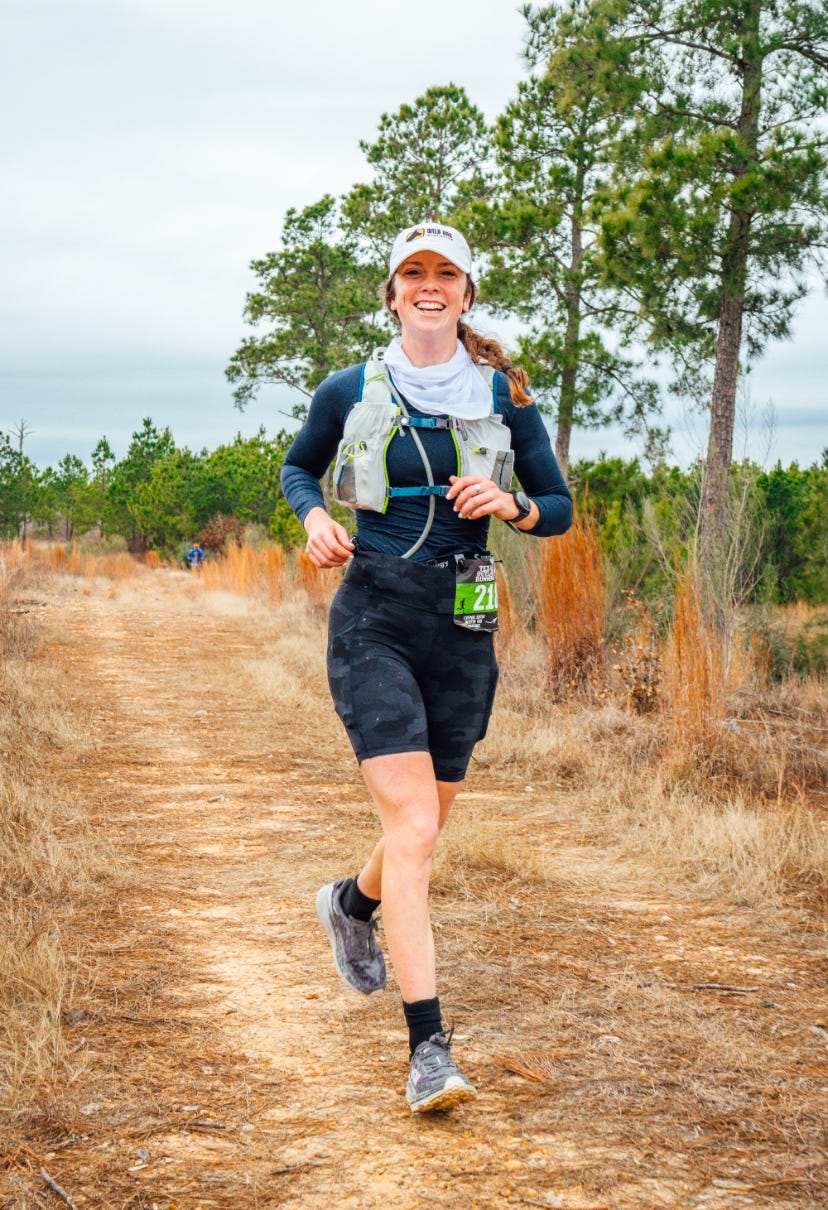
I run five days a week, and how far I run depends on what race I have coming up! With my next race being a 50K in November, I’m at about 40 to 45 miles per week right now, with a three-hour long run on the weekends. I also strength train three days a week.
But my running routine hasn’t always looked that way! I’ve been ultrarunning for seven years, and when I first started, I was only running two to three days a week.
As I’ve gotten stronger and fitter — and fallen more and more in love with running — I’ve slowly increased how often I run, how long my long runs are, and my weekly mileage.
I mean, think about it: it took me seven years to go from running 2 to 3 days a week to five! Training in a way that’s sustainable and allows me to stay healthy and excited has always been my number one priority.
Were you an athletic kid growing up? What are your early memories of what fitness and health were about?
I was an athletic kid! I’ve always loved sports. I ran track and cross country, but mostly just for fun on the side of my main sport, which was equestrian/show jumping.
I was a competitive equestrian for almost 20 years and worked professionally managing barns and riding horses for other people through college. It was my life, my calling, and my biggest passion until I graduated from college and started to feel disillusioned by the politics of the sport and the financial demands of pursuing it professionally.
I decided to walk away, which is when I started leaning more into running as an outlet for my competitive drive.
I credit my time with horses for so much of what I now bring to trail and ultrarunning: my work ethic, resiliency, competitiveness, love for monotony and grunt work, for the outdoors, and for moving freely and wildly over the earth.
How did you first get into running? Was there something that inspired you — like a performance at the Olympics, for example, or a runner you discovered by watching them on social media or TV? Or was there someone in your own life who inspired you to think, ‘maybe I can do this?’
While I’ve been running since I started track and cross country in middle school, I didn’t really get into it until I graduated from college and was looking for something to fill the void left by quitting competitive show jumping.
Even when I wasn’t racing and was still mostly focused on horses, I would run after long, exhausting days at the barn. It was how I decompressed, managed stress, re-grounded myself, and got some time alone with my thoughts to work through things.
So naturally, when I found myself in an identity crisis after walking away from a passion I’d had for 20 years, running was the first thing I leaned on. It didn’t just give me an outlet for my competitive drive — it also helped me cope with the disappointment and frustration of my riding career not turning out the way I’d dreamed.
I started with a few 5Ks here and there. Then it was 10Ks, half marathons, and eventually marathons. While I was training for marathons, I stumbled across a seven-mile trail race online and thought it looked like a fun way to switch up all the road running.
I expected it to be a one-time thing. Instead, I fell in love with the trail and got completely hooked on trail running.
At that race, I also met runners doing the 50- and 100-mile distances, which was my first introduction to ultrarunning. Seeing how strong, positive, and determined those runners were made me want to be that way too.
I’d say the runners I met at that first seven-mile trail race were some of my biggest inspirations early on. So much so that I came back the very next year and ran the 50-mile distance — my first ultra.
That was seven years ago, and I’ve been running ultras ever since.
How has your interest in running evolved since then? Do you run farther, or faster now?
I’ve always felt drawn to running farther. Ever since I ran my first 50-miler, my goal was to eventually run 100 miles, which I finally did this past January. So while that’s always been the goal and the direction I’ve been headed, I’d say my “why” has evolved.
When I first started ultrarunning, I was pretty driven by my ego. I loved running, but I also really liked being able to call myself an ultrarunner and having progress to “show,” whether that meant running faster or running farther.
I think that’s just part of being in your early twenties, too. It’s easy to get caught up in how you’re being perceived by other people and there’s this feeling that everyone’s in a race to be as successful as possible, as quickly as possible.
And while I’m still very competitive and have specific goals to keep running farther and faster, that’s not why I run every day anymore.
I run because I genuinely love to run. It feels like what I’m supposed to be doing. Like I’m fulfilling something deep within myself. It connects me to who I am in a really powerful way.
It’s also how I feel connected to the outdoors. Growing up spending all day at the barn and around horses, I don’t miss the equestrian sport itself, but I do miss being at the barn and around animals all day. There was something so simple about that way of life.
When I run, I get to reconnect with that simplicity. Moving my body over the earth, being in the quiet, and just being present and free.
What do you balance your running with? Do you have a family to take care of? Kids, parents or other relatives or loved ones? If so, how do you balance all of it and still make time to run/care for yourself?
I mainly balance running with work, which has gotten a lot easier now that I coach online.
When I had my gym, it was a much harder balance to strike. Two years in, I had built a full book of clients and was coaching in person, on my feet, for 10 hours a day. On top of that, I was managing all of the backend work when I wasn’t coaching because I had no staff, it was just me.
At the time, I only had time to run 3 to 4 days a week max, with two of those runs happening at 5AM during the week, and the other 1 or 2 runs happening on the weekend.
But beyond the hours, I’d say the hardest part was the energy drain and mental load that came with owning a gym. My landlord would surprise me with a $1,000 invoice. My AC would break. I felt like I was constantly putting out fires while still showing up positive, energetic, and happy for my clients all week long, never letting anyone see the stress and labor happening behind the scenes.
That left very little energy for running — or for much of a personal life.
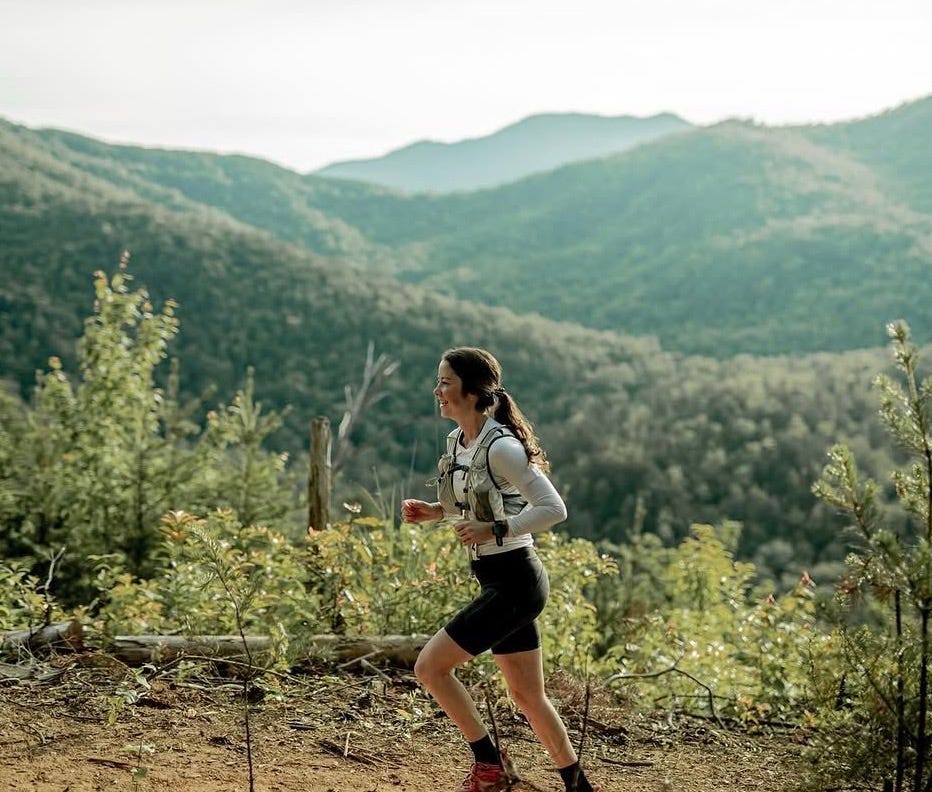
It was incredibly hard to fit running in during those years, but I also knew how important it was that I did. Running was the one thing that was truly mine. It was the time when I wasn’t answering client texts, picking up my landlord’s calls, or checking my email to see what urgent problem was waiting for me next.
It wasn’t easy to run at 5:00 a.m. twice a week or get a long run in on the weekend when all I wanted to do was sleep in. But I made it work because running was also what kept me grounded, sane, and connected to the fact that I was a human outside of my career.
The key during that time was being brutally honest about what I could handle. I had goals of running 100 miles, and I wanted so badly to be running more than 3 to 4 days a week. But if I had tried to force myself to run 5 to 6 days, I would have been setting myself up for failure.
Being realistic about what I could do — and then being really consistent with that — worked so much better than trying to do more than I could handle, falling off, getting discouraged, and feeling like I had to start over every week.
That’s how I stayed consistent, kept running, and continued training for big races through some of the busiest years of my career.
In the age of AI, when runners can create training plans with a few keystrokes, how are you approaching/changing the way you coach and train the runners you work with?
AI hasn’t changed how I coach, because I’ve always focused on a deeply personal, 1-to-1 style of coaching that goes beyond writing a training plan.
That started when I owned my gym and worked face-to-face with people all day, and it’s something I’ve intentionally brought into coaching online. I text with my clients weekly and sometimes daily, get on calls with them every month, and help them not only adjust and execute their training, but navigate the doubt, frustration, and emotions that come with chasing a big goal.
I’m actually really proud to be doing that in the age of AI, when so much of life is losing its humanness. I want to keep the experience of running fully human.
I coach beginner half marathon, marathon, ultra, and trail runners who also have really busy lives. They’re working 50-hour weeks, sitting in back-to-back meetings until 8 p.m., or traveling every other week. Some have tried AI-generated plans and found they didn’t work because a plan can’t always account for what happens when life gets exceptionally chaotic or sh*t hits the fan.
And while adjusting plans daily when unexpected things come up is part of what I do and how I help my runners stay on track, sometimes what a runner needs isn’t just an adjustment to their plan. They need someone who knows what they’ve been through, understands how hard they’re trying, and can remind them when they’re doubting themselves: “You’re doing enough. You can do this. I believe in you.”
I don’t just coach the plan. I coach the runner — the person. I’m passionate about running as a vehicle for growing as a person, building character, and becoming stronger and more resilient than you realized you could be.
I coach because I’m passionate about running, but I’m even more passionate about serving people, pouring into people, and loving people.
I’d love to see AI try to do that the way only a human being can.
Is there anything you’re especially proud of that you can point to your running and say, ‘this helped me achieve ______’?
I’m really proud that, no matter what I was going through — the busy years at the gym, races that didn’t go my way, the normal self-doubt and questioning, and wondering why I was trying so hard when it maybe would have been “easier” to stop chasing big goals — I never gave up.
For seven years, I’ve run consistently. What that looked like changed depending on the season of life I was in. There were years when I ran 2 to 3 days a week and barely did long runs, and there are years like now when I’m running five days a week and doing a long run every weekend. But I’ve never stopped. Running has always stayed part of my week and part of my life.
And that, more than anything, is how I’ve gone from running my first 5K to finishing ultras from 50K to 100 miles. Not because my mileage has always been impressive, or because I do crazy workouts, or because I’m exceptionally fast or talented. I’ve just kept showing up — and I’ve learned to love running more and more along the way.
I recently heard someone on a podcast call himself a “perennial bloomer,” and I haven’t stopped thinking about it.
I’m a perennial bloomer.
I may not be the most impressive runner with the most impressive results, but I keep coming back year after year. And because I keep coming back, I keep growing. I keep getting better. I keep finding out what else I’m capable of.
I think that’s what I’m most proud of.
What have you learned about yourself from your running journey? Is there anything that’s changed about you since you started?
I’ve changed completely since I started. When I ran my first 50-miler seven years ago, I had no idea what I was in for or how hard it was going to be. I’d never run more than a marathon and figured if I could run 26.2 miles, I could run 50, right?
I finished, but I cried and complained through most of the second half. I had no concept yet of what it meant to work on mental strength and toughness.
It was one of those finishes where everyone was telling me how proud I should be, but I didn’t feel as happy as I thought I would. I was disappointed in how I’d handled myself when things got hard.
I had gotten into ultrarunning because I was inspired by the 50- and 100-mile runners I met at my first trail race. They were positive, strong, and determined. At my first ultra, I hadn’t been any of those things. That race held up a mirror to who I was when things got tough, and I wasn’t happy with what I saw.
I remember promising myself I never wanted to act like that at a race again. No matter how future races went, I wanted to be able to stay strong, positive, and determined when things got hard.
Over the 13 ultras that followed, I treated every difficult moment as an opportunity to keep that promise. I learned that I couldn’t always control how my race was going, but I could control who I chose to be while it was happening.
That became more important to me than any finish time or place on the leaderboard. I wanted to cross every finish line knowing that, regardless of the result, I was proud of how I handled myself that day.
People remark on my mental strength at ultras now, and I think it’s important to share that I wasn’t always this way. I became this way by putting myself in hard situations over and over again and choosing, little by little, to respond differently.
Where would you like to go with your running? Is there anything special you’d like to achieve — like, say, running all six World Marathon Majors, or running an ultra?
I want to go so many places with my running! I’d love to keep getting faster at the 100-mile distance, and I definitely want to run a 200-miler one day.
I’d also love to section-run the entire Florida Trail, a 1,500-mile National Scenic Trail that passes through some of the most stunning and diverse landscapes in Florida. And once I’ve experienced the whole thing in sections, maybe I’ll try to run it continuously!
What keeps you going? Especially if you’ve been running for a while — do you ever get bored with it? How do you find new things to motivate you, to keep you going?
Because running has become part of how I live a full life and express myself, I really don’t get bored with it. I feel incredibly lucky to run five days a week, especially because I used to not have time to run that much.
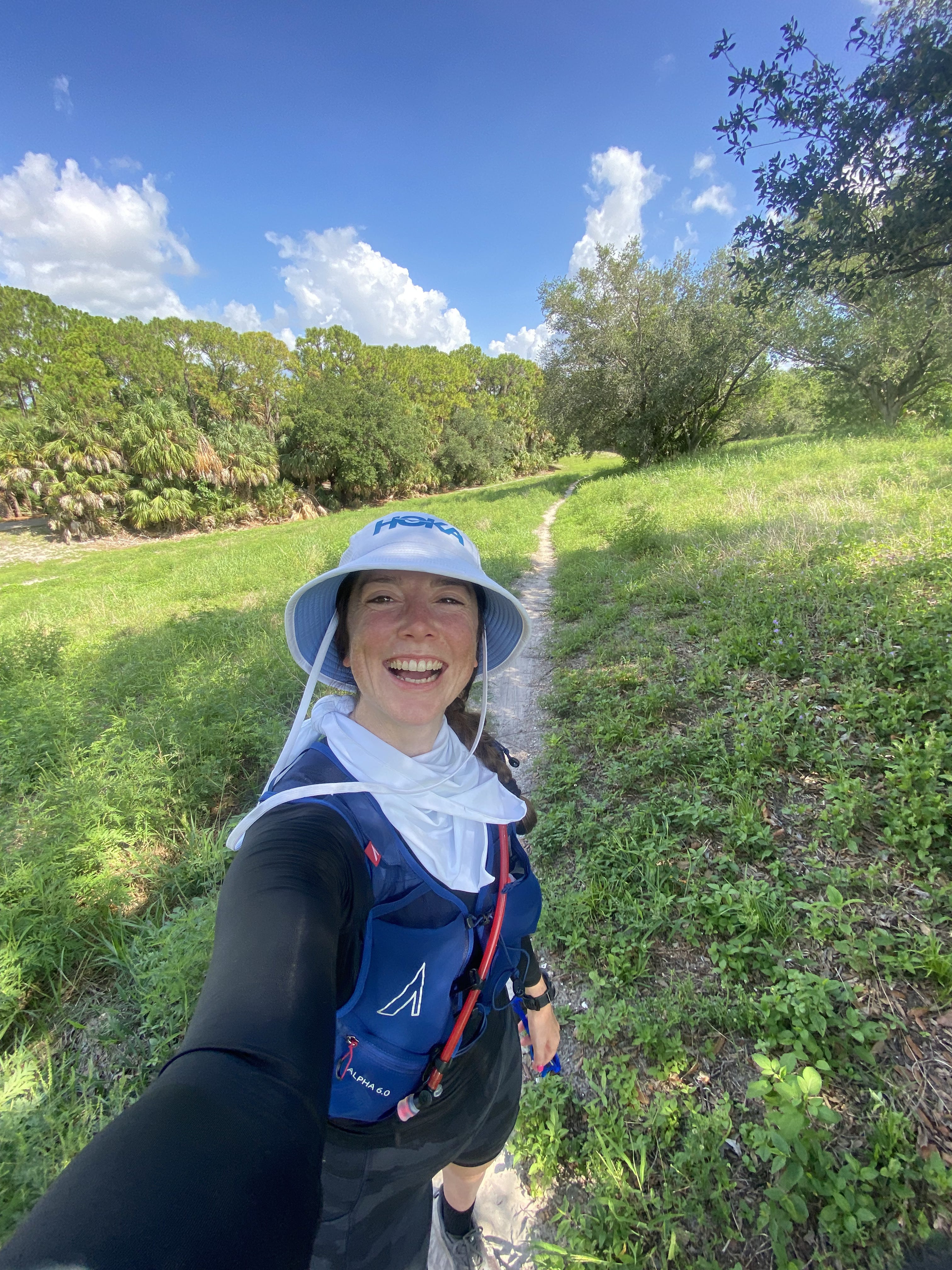
Now that I coach online, I can also spend so much more time on trails. When I owned my gym, I did a lot of my running on the treadmill or roads because they were more efficient and accessible. Now I get to build my life around trail running and being outside, and I’m genuinely grateful for that.
That doesn’t mean I leap out of bed stoked every morning when my alarm goes off at 6:00 a.m. I’ve just learned not to let temporary feelings dictate what I do.
I might wake up tired and grumpy, but I know those feelings will pass. So I get up anyway and do the thing I’ve done for years, knowing I’ll probably experience another 50 thoughts, feelings, and emotions before my morning run is even over. That’s just part of being human and none of it has to mean anything unless I give it meaning.
Look back at yourself when you were a kid, maybe say 10 years old. Remember how you felt, what you thought, especially what you thought you were capable of back then. If you could talk to that kid now, what would you say?
I talk to that kid every week, if not every day! Because that kid was a dreamer. She was bold and courageous and looked at life like there were no limits and anything was possible. She assumed she was capable of anything she put her mind to and never even considered that she couldn’t have everything she wanted.
I ask that kid to help me live that way now as an adult. Because it’s so easy to let life slowly dim your dreams, your drive, and your sense of wonder and possibility.
I have to believe there was a reason that kid was so confident and so sure of herself at such a young age. So I let her make the decisions and drive the ship — not the 31-year-old version of me who sometimes tries to convince me to “be more realistic.”
The older I get, the more intentionally I return to my younger self.
So I guess I would say, “Thank you. You inspire me.”
Explore more from THM
There are so many more reader stories we’ve shared — don’t miss these:


I loved reading this!! I'm a competitive show jumper and runner too, although running has been rocky for the past 2+ years due to tendon tightness issues. Part of me still believes somehow riding is constricting my hip/muscle movement but I refuse to give up that part of my life, even though having to stop running was like losing a part of me. I know what it's like to love both of those sports more than life!! I hope I can continue to do both but I know the reality is I might not be able to, whether it's cost/time with horses or my body giving out again with running.
Great story Abby!!! It truly is amazing what humans can accomplish with long distance running! Thank you for being a great coach that can help the transformation from limited running (or none) to completing marathons and beyond!!
Mark