


Morning, friends! ☀️
It’s a little after 9:00 a.m. on the east coast, the sun is shining here in Atlanta where I live and it feels like a brand new day. And I’m really glad it does, because that reminds me of the person I want to introduce to you today, a runner I’ve gotten to know through Substack, Verity Wright.
For those of you who don’t know her, Verity is a longtime U.K.-based runner who managed her own running club for more than a decade. But an injury forced her to step away from running for an extended period, time she spent reassessing a lot of things — which she’s written about eloquently in her newsletter, RunVerity.
I’m always drawn to people who’ve gone through things — who’ve hit some turbulence in the air and been tossed around, and have had to figure out where to go and what to do when “fear obscures the path,” as Mary Chapin Carpenter once sang.
That’s why I’m so drawn to Verity’s story, and I think you will be too. As always, I’d love to hear your story too! If you’d like to share it, just reach out by replying back or in the comments. — Terrell
So, let’s hear a little bit about you! Who are you, your age (if you’d like to share), where you’re from, what you do, etc.
I’m Verity Wright, 57 years old and live in the U.K.
I set up an inclusive running club in 2014 and closed it in December 2025 after eleven years. I’ve been running for over 25 years and I’m currently rehabbing a broken ankle from November 2025 by writing a book about why women stop running.
What does your running routine look like? How many times a week, and how far do you run?
My running routine has dramatically changed in the last six months, I've gone from running six days a week, three of those days twice a day, with a weekly mileage of 45 miles.
I’m now building endurance back up slowly having started run/walking for 20 mins in January. I’m pleased to say I’m running four times a week now with my longest run of 13 miles a couple of weeks ago.
Were you an athletic kid growing up? What are your early memories of what fitness and health were about?
No, I really wasn't an athletic kid. I was firmly placed in the "not sporty" category at school and to ease the visible exasperation of my P.E. teachers, many blind eyes were turned on my forged "please excuse me" notes.
I left school with a well-honed smoking habit that was perfected on those Wednesday afternoons.
How did you first get into running? Was there something that inspired you — like a performance at the Olympics, for example, or a runner you discovered by watching them on social media or TV? Or was there someone in your own life who inspired you to think, ‘maybe I can do this?’
My dad was a runner, and I used to go and support him at race events. He ran the Everest Marathon in 2002; I hadn’t started running then, but it was there in the background.
Once my children were born, I became more active, throwing myself around an aerobics class, mainly because the leisure centre provided a free creche for my kids.
I’d always wanted to be able to run, but just didn’t think I’d be able to. Then one Christmas in France I went out with my dad, there I was, puffing and panting, trying to keep up with him, but he just said three words: “slow it down.” I did, and I was hooked.
How has your interest in running evolved since then? Do you run farther, or faster now?
Since my ankle break, it feels like my running has come full circle, because where I am now really reminds me of when I first started.
I’m building confidence and endurance again, sprinkled with just a dash of speed to see how it all fits and I’ve entered a few new races that I’m using to benchmark this new, older version of a runner.
I still love it, but, just like when I started, I’m building a new relationship with it, we’re finding out what works with my new routine and I’m developing confidence again, both physically and mentally.
It feels a bit like getting back on a horse that’s thrown you off, tentatively re-establishing those bonds of trust.
For eleven years I ran with the community I’d created, and it was fabulous to have that accountability and support. Now I’m learning to run on my own again and be accountable only to me.
This is new and it’s scary, but also exciting, it’s running in its simplest form; what can I achieve when nobody’s measuring but me?
What do you balance your running with? Do you have a family to take care of? Kids, parents or other relatives or loved ones? If so, how do you balance all of it and still make time to run/care for yourself?
When I had my run club it was hard to fit my own running around the club sessions and family life. I have a husband, two children and three grandchildren, and I used to be out four nights a week and most weekends. Now [that] I can fit running in around what matters to me, running doesn’t feel like a grind anymore.
There were mornings when I was meant to run for me, but I’d tell myself I wouldn’t go because there was always tomorrow, or I’d be too tired to run, so wouldn’t go because I knew I’d have to run with my club either that evening or the next day.
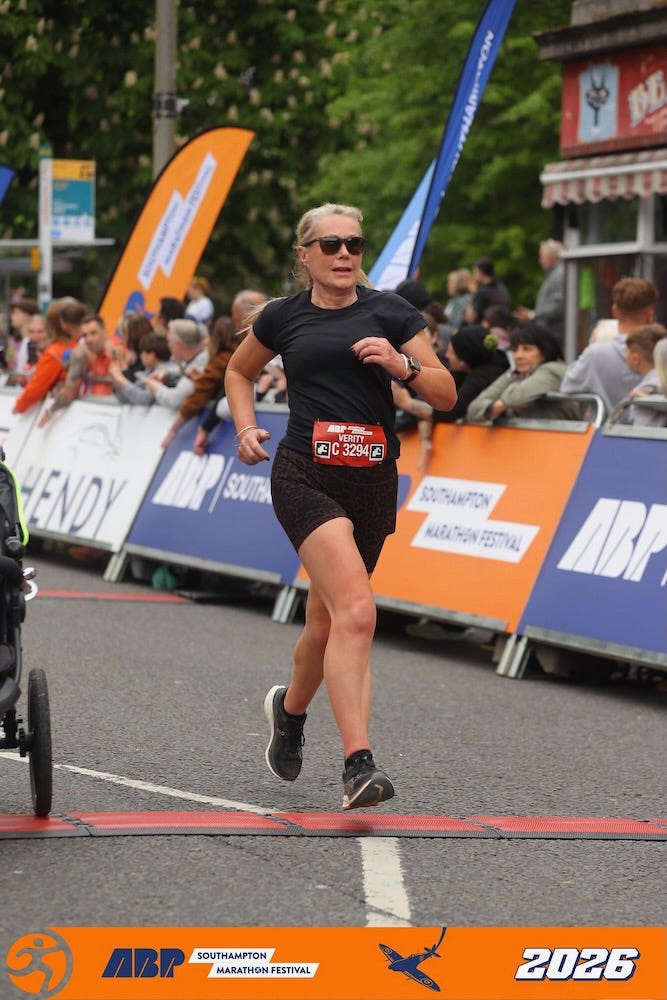
Now, especially after my injury, I know that running tomorrow isn’t promised, so I just go. It’s hard going on your own, I’m not going to lie, it would be a lot easier to stop running all together but, I keep putting my trainers on and showing up.
To help, I run with a friend once a week, and my daughter, which is a joy, and go to parkrun to push myself. My whole running landscape has changed.
Is there anything you’re especially proud of that you can point to your running and say, ‘this helped me achieve ______’?
I’m proud of so much, I don’t know where to begin.
For me, running gave me a purpose, it changed my life and gave me a confidence I never knew I needed. I remember after running my first marathon I felt I had something to hold my head high about, I was a late starter in everything, running, my Psychology degree, this all of it happened in my 30s and running made me feel as though I belonged.
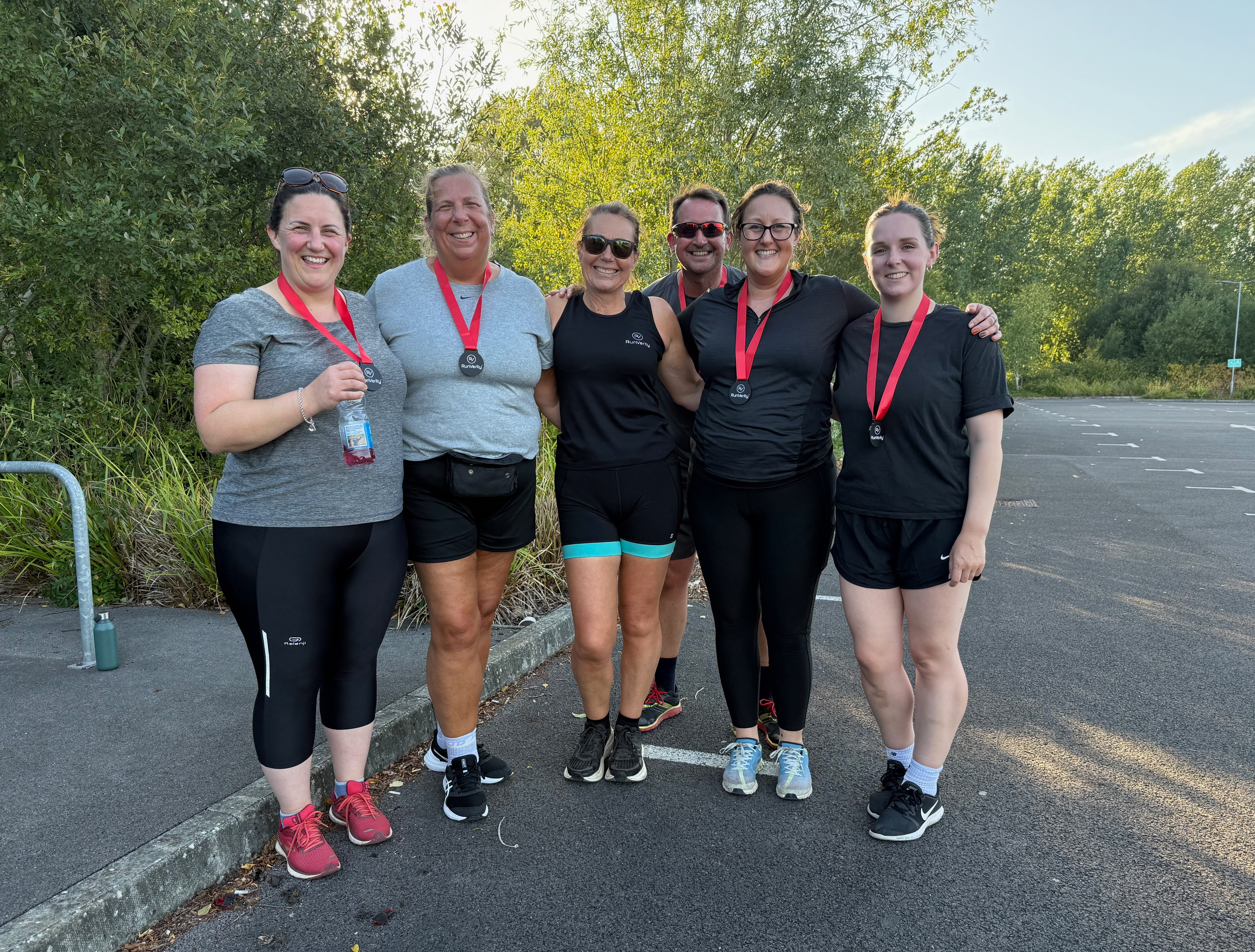
Then I started teaching everyday people how to run, people just like me, who’d been told they weren’t sporty or good enough when they were at school.
Their internal narratives still stung as they turned up on the first night of my beginner’s course “You don’t look like a runner” “You’re too slow”. “You can run; you’ve got asthma”. And I watched what running did for every single one of them as they crossed many finish lines in bodies they’d spent years hating.
I won a Changing Lives Through Physical Activity award which was a wonderful moment. I still get messages from people telling me what they’ve achieved through running. Giving people the tools to do this, to run in their own bodies, at their own pace is what I’m proudest of.
What have you learned about yourself from your running journey? Is there anything that’s changed about you since you started?
I’ve learnt that I’m tough and resilient. Running has been a complicated relationship that at times has been hard to navigate. I suppose a bit like a friendship, sometimes we’ve fallen out and I’ve been angry and frustrated with it, stubbornly ignoring it for months.
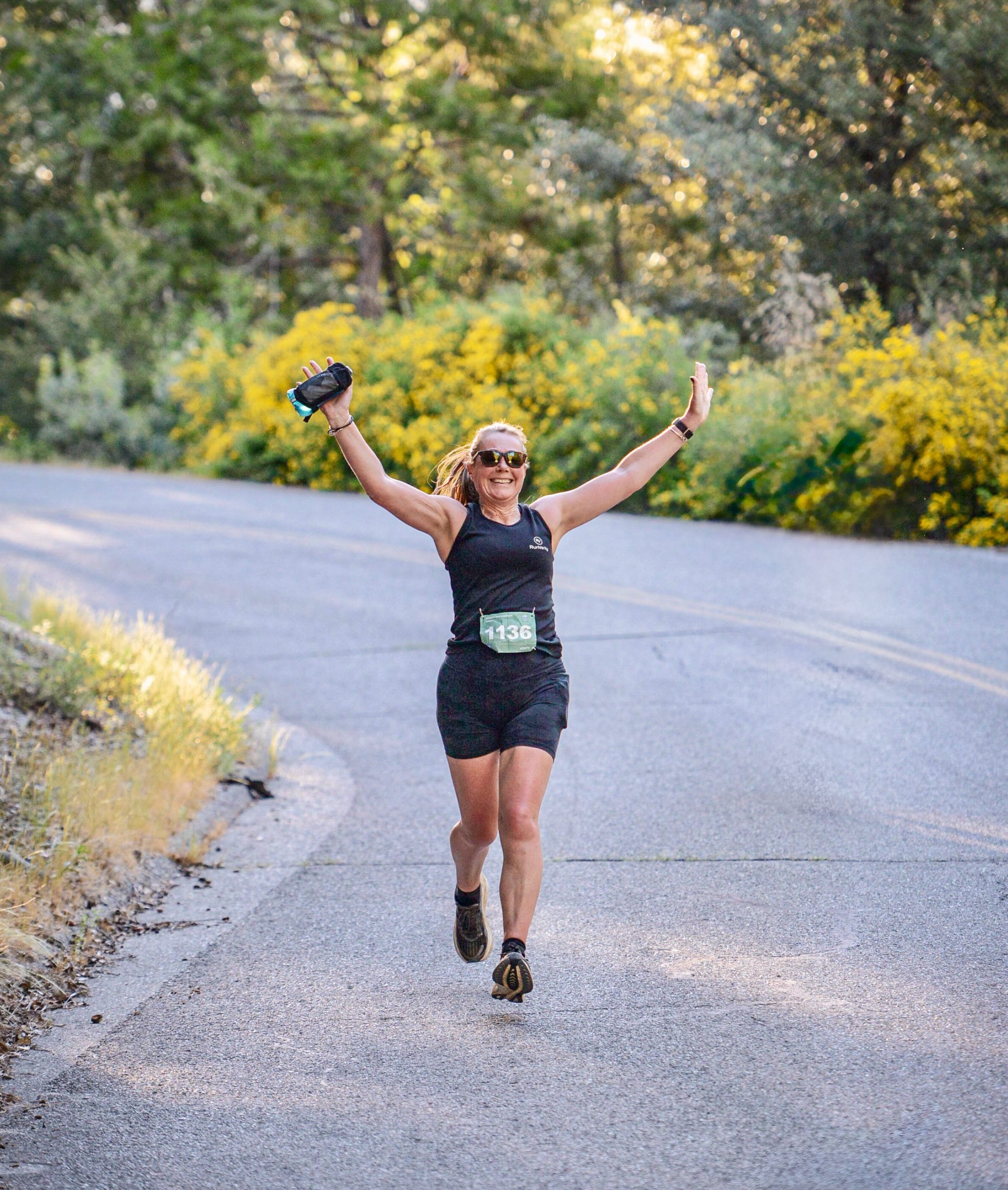
And then they’ve been other times when we’re never apart, and the joy and laughter make all the bad times worthwhile. I’ve also been to some wonderful races, and run through breathtaking scenery — the Yosemite Half Marathon last year was a highlight.
I’ve run marathons through the streets of Paris as though I mattered to everyone there. And sometimes I’ve had people turn their back on me as I’ve run past, clear signals of dislike. But I’ve just kept on running. It’s just something I must do.
Where would you like to go with your running? Is there anything special you’d like to achieve — like, say, running all six World Marathon Majors, or running an ultra?
I’m excited to see what’s next. I’m 57 years old and a nanna. Some women my age might be thinking about giving up, well I’m not.
I don’t know what a 57+ women can achieve because the research hasn’t been designed with women like me in mind, so I’m going to try and rip up the nanna stereotypes and just keep going.
Last week I achieved my highest ever age grade percentage in a race and I thought that was cool, so who knows what’s around the corner. More marathons, not this year, but next.
What keeps you going? Especially if you’ve been running for a while — do you ever get bored with it? How do you find new things to motivate you, to keep you going?
I don’t know, it’s just something I must do, it’s who I am and part of me now. I've been doing it for over 25 years, and I've never really got bored of it because it's never been the same twice. Different routes, different paces, different bodies, different reasons.
Right now, it's about coming back from injury and seeing what this new version of me can do. Next year a marathon, just for me. The year after, something else. The running keeps changing because I keep changing, and that's what keeps it interesting.
Look back at yourself when you were a kid, maybe say 10 years old. Remember how you felt, what you thought, especially what you thought you were capable of back then. If you could talk to that kid now, what would you say?
That what other people think of what you look like when you run is bollocks. Don't let their comments stop you from doing something you love.
One of the reasons women don't run is their fear of judgement of what people think they look like. I’ve learnt no matter what you do, people will always have opinions of you.
But if they stop you feeling the confidence and joy you get from running, what would your 85-year-old self regret more? Running with a red, sweaty face or sitting the race out because you don't look like how a woman should look. What, happy?
You might also like…
On Resilience

If you’ve followed the career of former Olympian Kara Goucher for any length of time, you know what a hero she’s been to so many in the running world. (And to me!)
In Praise of Idleness

Lately, I’ve been reading The Essays of E.B. White, a collection by the author of the famed children’s stories Stuart Little and Charlotte’s Web. Somewhere I picked up that he was among the best-ever essayists, and since that’s kinda what I do here, I thought to myself, “maybe I can learn something?”

Thanks Terrell for sharing and Verity for putting yourself out there. I can relate to so much of the story. Whatever I say is not going to do it justice, but I'll make a couple of comments. Verity, I feel as though we need a chat over a coffee.
Firstly, congratulations on getting back to running. It's a tough thing to do when you've had a set back and even more so as we age.
I share your concerns about the people that carry around the mantra "I can't run" just because someone has told them that at some point in their life. I prefer to think of it as most people can learn to run (subject to physical limits), some will just be faster than others. I was sporty at school but am not a natural runner which I think is what makes me continue to do it. I love challenging myself!
PS. You certainly had a big act to follow if your dad did the Everest marathon!
A woman after my own heart! I'm a decade older and do NOT plan on stopping...things change, bodies change...but that doesn't mean we can't find new ways to keep climbing the metaphorical mountain. Go, Verity!